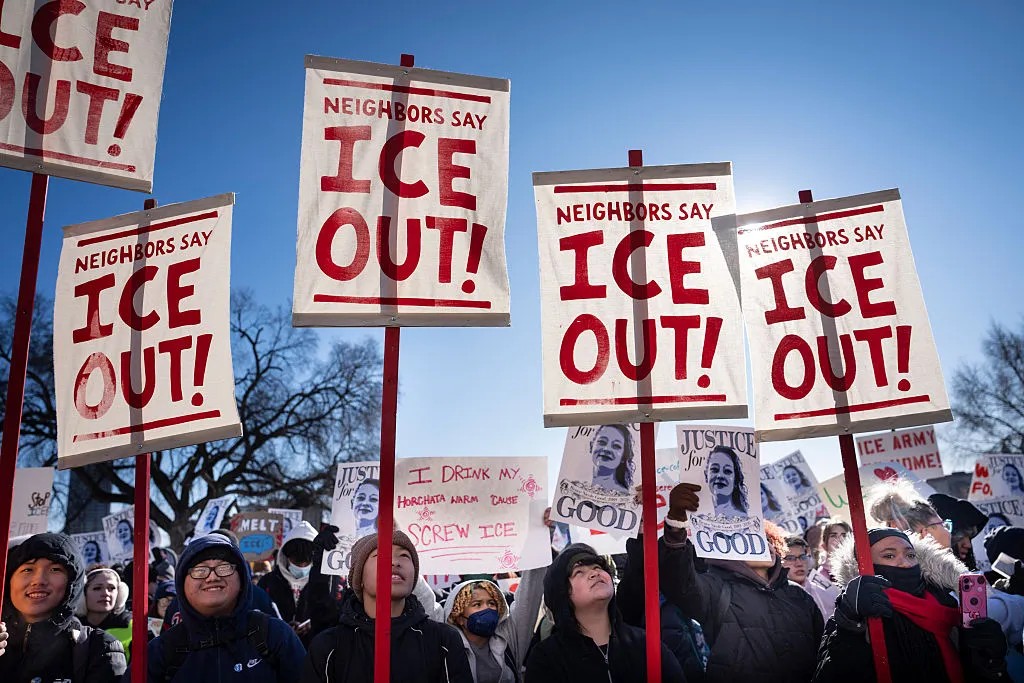
The recent surge in Immigration and Customs Enforcement (ICE) activity in Minneapolis has created a climate of fear and instability among teenagers, disrupting their education, social lives, and sense of safety. Following the fatal shooting of Renee Nicole Good by an ICE agent in January, the city has experienced relentless enforcement measures, prompting protests, school lockdowns, and widespread anxiety.
The Impact on Daily Life
The ICE crackdown extends beyond arrests; it has fundamentally altered the atmosphere in schools. Students are opting for remote learning out of fear of targeting, with some districts reporting 20-40% absenteeism. One 15-year-old student, Zicoya, explained that many students of color are avoiding school due to fear of being detained. She described witnessing videos on social media of ICE agents forcibly removing individuals, including children, from public spaces, and hearing firsthand accounts of ICE surveillance outside homes.
The situation has created a stark segregation within schools, with a noticeable absence of Hispanic students who prioritize their safety by staying home. This has left remaining students feeling isolated and frustrated.
Heightened Anxiety and Trauma
The presence of ICE agents in neighborhoods, schools, and parking lots has left teenagers on edge. Sylvia, a 17-year-old senior, expressed constant worry about encountering ICE vehicles and fears for her father’s safety while he commutes to work. The uncertainty extends to basic activities, like picking up children from school, which has become a “dangerous undertaking,” according to one parent.
The disruptions evoke echoes of pandemic-era school closures, but with a crucial difference: this time, the fear is targeted and deeply personal. Zicoya described the situation as even more isolating than the universal shutdown, as ICE-related anxieties create a unique form of trauma.
Community Resistance and Parental Fears
Parents are responding by organizing school carpools, patrolling school grounds with whistles, and providing support to families in hiding. However, some parents, like Ella, a naturalized citizen, fear exposing themselves to ICE due to their appearance, despite having legal documentation. She emphasized the “terrifying” and “unnecessary” nature of the situation, highlighting the disruption to a community already rebuilding after the pandemic and the murder of George Floyd.
Lasting Psychological Effects
The events are not just disrupting present-day routines but also shaping the long-term outlook of Minneapolis teens. Sylvia, who participated in a school walkout, stated that this experience will forever influence her political engagement and empathy for those in similar situations. The constant fear and injustice have left her and her peers feeling angry, stressed, and deeply unsettled.
“I’ll be more politically minded,” Sylvia said. “Because before, while injustices were easy to move on from after initially feeling upset, I’m living through it. And I think I’ll have a lot more empathy for people in these situations now.”
The ICE crackdown in Minneapolis represents a growing trend of aggressive enforcement tactics that disproportionately affect communities of color and immigrant families. The long-term psychological and educational consequences for teenagers in the area will likely be severe, as they navigate a new reality defined by fear, distrust, and heightened political awareness.