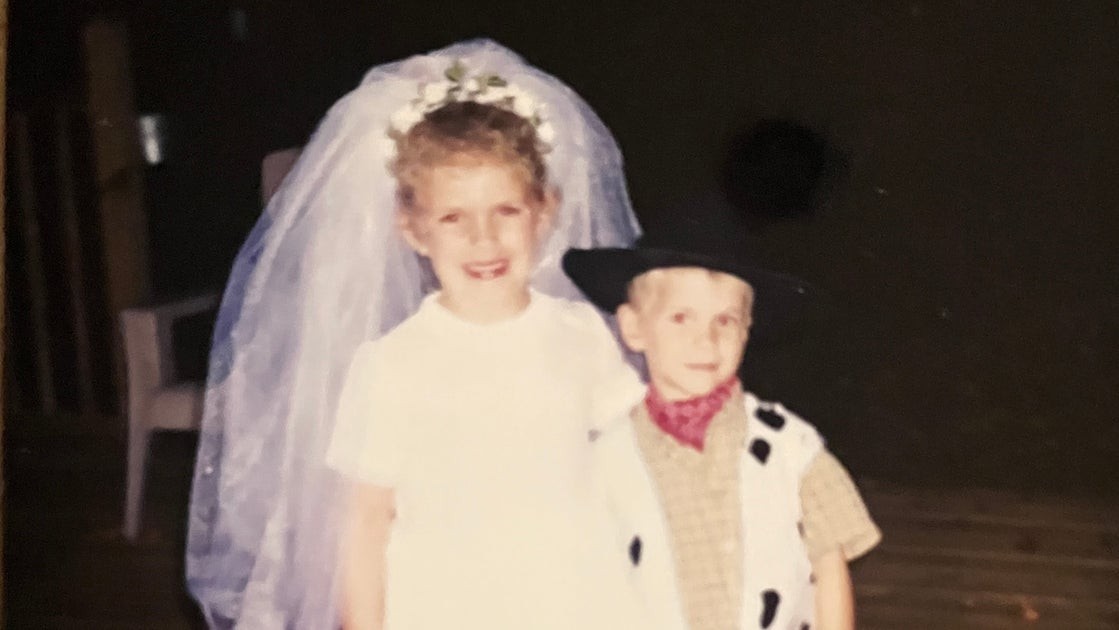
For six years, starting at age fourteen, I wrote over a hundred letters to my future husband. The intention was simple: to share them with the man I was destined to marry, according to the evangelical Christian teachings of my youth. Now, as a thirty-year-old who has long since deconstructed that faith, reading those letters aloud to my actual husband has been both excruciating and unexpectedly freeing.
The letters are a relic of “purity culture” – a movement dominant in the 1990s and 2000s that promoted sexual abstinence, traditional gender roles, and marriage as the ultimate goal for young women. This wasn’t just about waiting for marriage; it was about preparing for it with an almost obsessive fervor. From childhood play involving a miniature wedding dress to the relentless emphasis on my future role as a bride, the message was clear: my worth lay in my eventual submission to a husband.
Growing up in this environment meant that dating wasn’t casual; it was a direct path toward marriage. The fantasy of being a bride wasn’t merely a childhood game, but a deeply ingrained identity. It was about power, visibility, and being adored – ideals reinforced by religious teachings that equated marriage with purpose and agency.
The letters themselves are cringeworthy. One from age fourteen details my virginal purity and the “special gift” I had saved for my future husband. But beyond the awkwardness, they reveal a desperate attempt to control something in a life that often felt out of control. Within a high-control, patriarchal religion, marriage felt like the only path to power, stability, and escape.
Sixteen years after writing the last letter, I rediscovered them and began sharing them online. The response has been overwhelming. Thousands of women have shared their own experiences with purity culture, their own burning of old journals, and their own journeys of deconstruction.
The irony isn’t lost on me: letters meant for a future husband have become a source of connection and healing. Reading them with my husband, Zach, has been a painful but necessary process. We laugh, we cringe, and we recognize the echoes of a past that still shapes our present.
The most powerful realization is that the letters were misguided, but the young woman who wrote them was simply trying to survive. She grew from a teenage girl obsessed with marriage into a woman who knows her worth extends far beyond her marital status.
Healing is the bravest thing I’ve ever done. Sharing these letters isn’t about bravery, but about compassion for the girl who believed marriage was her only path. If you grew up in a similar environment, may this story remind you that there is power, agency, and purpose beyond being someone’s wife. The letters were meant to connect me with my future husband, and in a way, they have. Just not in the way I once imagined.