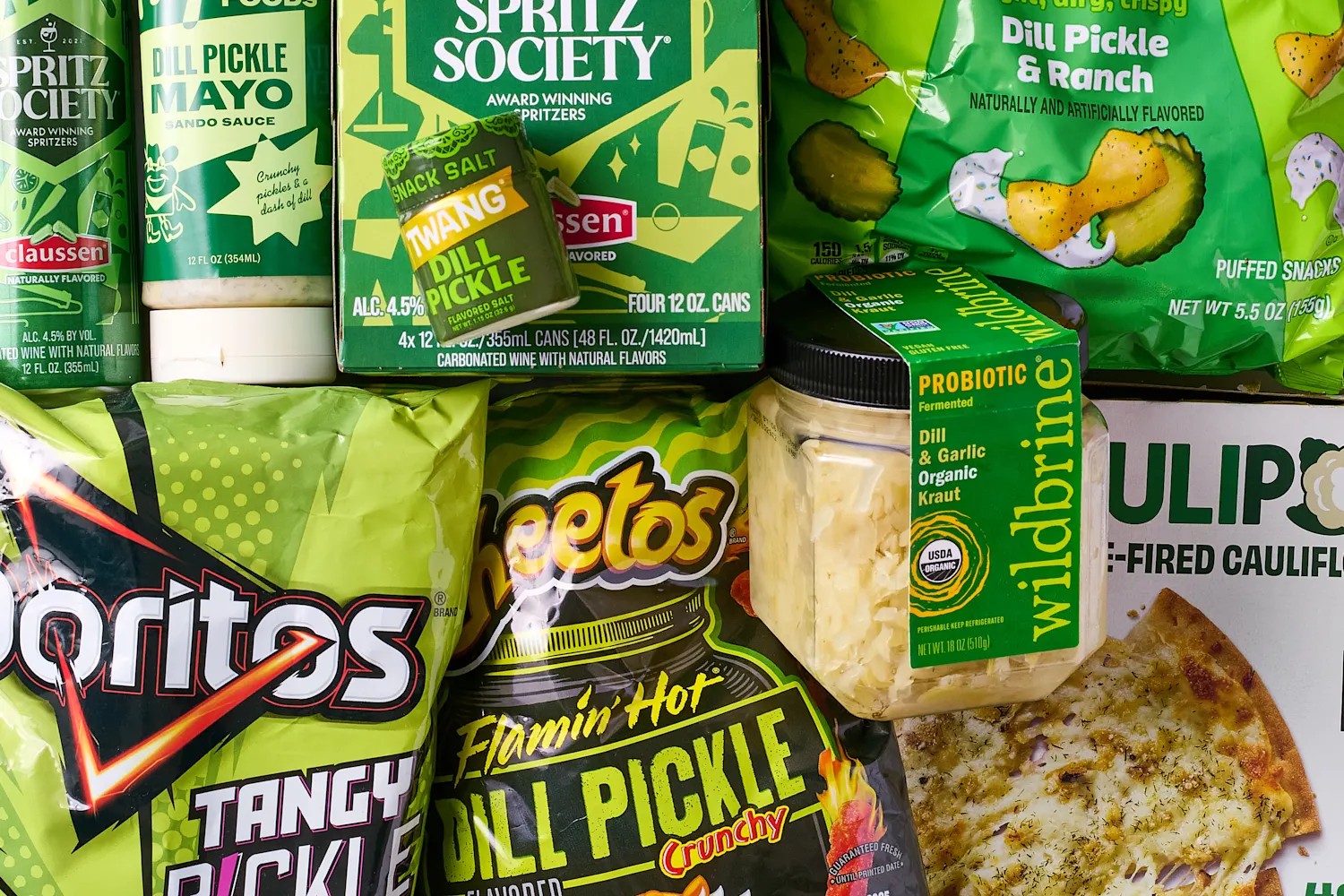
The pickle, once a simple condiment, has exploded into an all-consuming food trend. From chips and condiments to candles and lip balm, the dill pickle flavor is everywhere. This isn’t just a passing fad; it’s a symptom of how quickly consumer culture latches onto novelty, often with little regard for quality or sustainability.
The Rise of Pickle-Flavored Everything
The trend began innocently enough with pickle-flavored chips from brands like Lay’s and Miss Vickies years ago. However, the market has since been flooded with pickle-infused products: Garden Veggie snacks, Goldfish crackers, Pop Daddy Pretzels, Trader Joe’s dill pickle mustard, and Hidden Valley’s dill pickle ranch are just a few examples. The obsession doesn’t stop at food, either. Consumers can now buy dill pickle-scented candles, including collaborations between Grillo’s Pickles and P.F Candle Co., and even a dill pickle-flavored lip balm from e.l.f. Cosmetics.
This aggressive saturation raises questions about how many products we need versus how many are simply manufactured to exploit fleeting trends. The sheer amount of capital poured into research, development, and marketing suggests that the goal isn’t necessarily to create good products, but rather to capitalize on consumer attention.
Quality Over Quantity: When Trends Backfire
The rush to market often leads to poorly-made goods. Take the Dill Pickle Cup Noodles from last summer, which received overwhelmingly negative reviews, with critics calling them a “cup of nightmares” and citing a “bitter aftertaste.” The environmental cost of producing and then disposing of these failed products is significant. Millions of dollars are spent on products that consumers don’t want or enjoy, raising questions about resource allocation and waste.
The Psychology Behind the Trend
The pickle obsession may be rooted in deeper anxieties. As comedian Jordan Myrick observed, “People are justifiably scared of the world right now, so it’s easier to be like, ‘ALL I THINK ABOUT ARE PICKLES!’” The trend serves as a distraction from larger issues, offering a temporary dopamine hit through novelty consumption.
The cycle is simple: algorithms amplify trends, consumers chase fleeting joy, and brands exploit the demand.
The next time you see a pickle-related product, ask yourself: Is this something I genuinely want, or am I simply being swept up in the chaos of consumer culture? The answer could save you money, reduce waste, and help you focus on what truly matters.