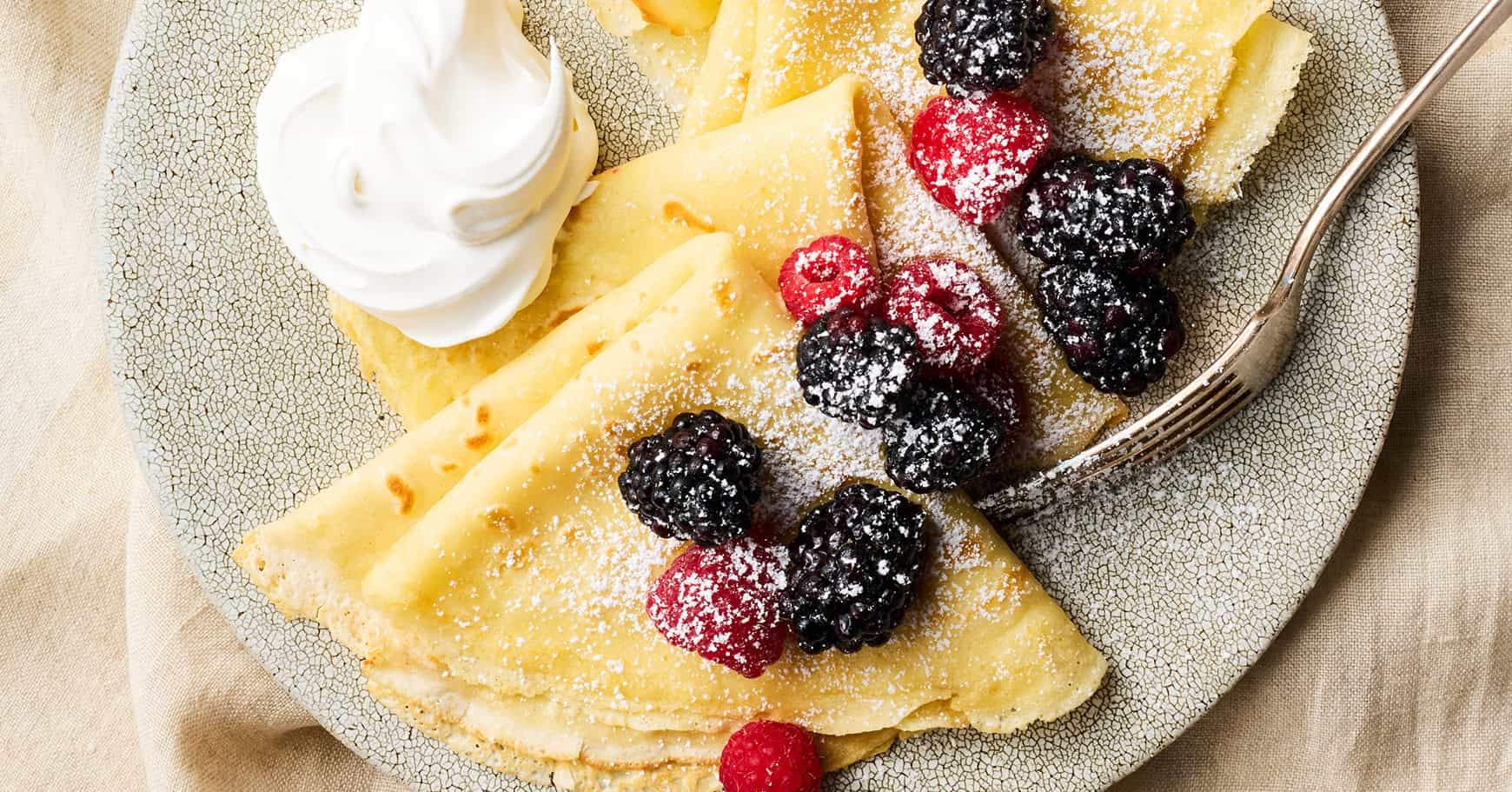
Crepes are often viewed as a sophisticated French delicacy that requires professional culinary skills. However, with just eight pantry staples and a few technique adjustments, you can achieve thin, tender pancakes with perfectly crisp edges right in your own kitchen.
Whether you are aiming for a sweet weekend brunch or a savory dinner, this versatile recipe bridges the gap between “fancy” dining and home cooking.
The Science of a Perfect Batter
The secret to a great crepe lies in the balance of texture and chemistry. Unlike thick American pancakes, crepes require a liquid, pourable batter that spreads easily.
Key ingredients and their roles:
– All-purpose flour: Provides the necessary structure. Pro tip: Spoon and level your flour rather than scooping it directly to avoid a dense, heavy batter.
– Eggs: These act as the binding agent, ensuring the crepes are flexible enough to fold without tearing.
– The Milk-Water Ratio: Using a combination of milk and water is crucial. While milk adds richness, adding water thins the consistency, allowing the crepes to become delicate rather than heavy.
– Melted Butter: Adds a rich, velvety flavor profile.
– Flavor Accents: Sugar and vanilla create a sweet base, while sea salt enhances all other flavors.
Note on Versatility: To pivot from sweet to savory, simply omit the sugar and vanilla extract from the batter.
Step-by-Step Preparation
The process is broken down into three essential phases: mixing, resting, and cooking.
1. Mixing the Batter
For maximum efficiency, use a blender.
– First, blend the liquid ingredients (eggs, milk, water, butter, sugar, vanilla, and salt).
– Add the flour and blend only until just combined.
– Avoid overmixing: Overworking the batter develops too much gluten, which results in a rubbery, tough crepe rather than a tender one.
2. The Importance of Resting
Once mixed, let the batter rest in the refrigerator for at least 30 minutes (or up to 24 hours). This resting period allows the flour to fully hydrate and the gluten to relax, which is vital for a smooth, consistent texture.
3. Cooking Techniques
Heat a medium nonstick skillet over medium-low heat and lightly brush with butter.
– The Tilt Method: Pour approximately 1/4 cup of batter into the pan and immediately tilt the skillet to spread the liquid into a thin, even circle. If you wait too long, the batter will set before it can spread.
– Heat Management: As the pan retains heat, the edges may brown faster than the center. If this happens, reduce your heat to low.
– The Stack: As you finish each crepe, stack them on a plate. This keeps them warm and pliable for filling.
Serving Suggestions
The beauty of this recipe is its adaptability. You can customize your crepes based on the time of day:
| Sweet Options 🍓 | Savory Options 🍳 |
|---|---|
| Fresh berries & powdered sugar | Fried or scrambled eggs |
| Sliced bananas or cinnamon apples | Melted cheese (Swiss or Goat) |
| Nutella or peanut butter | Sautéed spinach or mushrooms |
| Lemon curd or whipped cream | Caramelized onions or roasted peppers |
Recipe Summary & Quick Reference
Yields: 8 servings
Total Time: ~45 minutes (includes 30 min resting)
Ingredients List
- 2 large eggs
- ¾ cup milk
- ½ cup water (plus extra if needed to thin the batter)
- 2 tbsp unsalted butter (melted and cooled, plus extra for the pan)
- 1 tbsp sugar
- 1 tsp vanilla extract
- ¼ tsp sea salt
- 1 cup all-purpose flour
Storage Tip: If you have leftovers, store them in an airtight container in the fridge for up to 2 days. Reheat gently on the stovetop or in the microwave.
Final Thought: By mastering the “pour and tilt” technique and allowing your batter time to rest, you can transform basic pantry ingredients into a restaurant-quality meal.