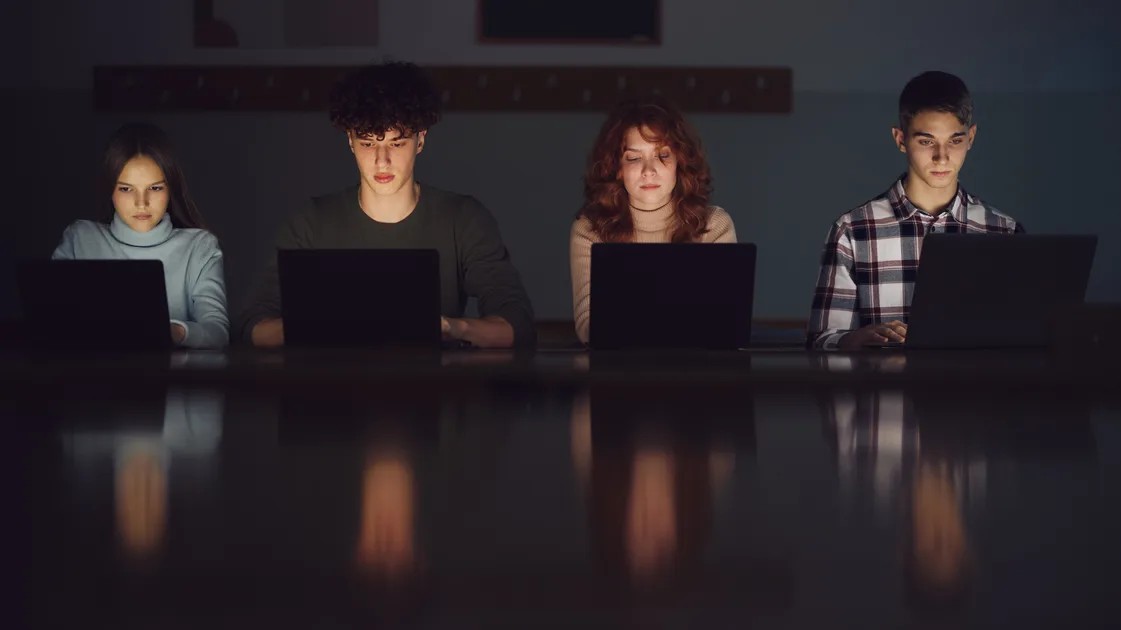
Fifty years ago, teachers panicked about calculators. Now we are debating generative AI. It’s the same panic, different decade.
Education experts see the pattern clearly. Screens themselves aren’t the enemy. Passivity is. When devices become the default instead of the deliberate tool, we lose the messy, vital parts of human learning.
Sam Campanaro, a former special education teacher, puts it plainly. Computer literacy is necessary. We live in a tech-driven society. But development matters. You can’t rush brain development by throwing tablets at toddlers who haven’t mastered self-regulation yet. The screen interrupts their natural rhythm.
Why Screens Work Sometimes
When used with intent, screens shine. They help disabled students find voice. They allow independent pacing. They enable creation. Think high school journalism. Students didn’t just stare at iPads.
Kirsten Peterson, an educational leader, remembers the mix.
* Developing photos in darkrooms
* Pitching ads to local shop owners
* Designing layouts digitally
The learning was physical. It was social. The blue light was part of the process, not the whole picture. Students shifted from passive consumers to active producers. They understood the tech because they lived around it, not just through it.
The Cost of Going Heads-Down
Things get dangerous when screens replace hands. The pandemic accelerated a bad habit: virtual default mode. Chrystine Mitchell of ChildCare Education Institute sees the loss. Concrete learning. Oral language. Problem-solving in groups. All gone when eyes are locked on glass rectangles.
Is it just about eye strain? No. It’s about isolation.
“When students are heads-down, there’s a real opportunity cost: the conversations, the collaborative sense-making.”
Screens crowd out the struggle. And the struggle is where learning lives. Peterson compares it to weight training. Only doing squats doesn’t make you a strong athlete. You need variety. Cognitive resilience comes from shifting modes. Tech fatigue might actually force us back to better habits.
AI and The Thinking Void
Here is the scary part regarding AI. Before letting algorithms think alongside them, students must learn to think alone. Mitchell warns against early reliance. Critical thinking isn’t born in the cloud. It is forged in silence, frustration, and independent wonder.
If a device always offers the answer, the brain never builds the muscle. It atrophies. We risk creating students who cannot sustain focus or engage in deep reading. We lose the “turn and talk” moment. That simple act of explaining a thought aloud crystallizes understanding. Hearing a peer challenge your idea stretches your own.
Heavy screen use kills these exchanges. It favors solitary processing. Over time, thinking becomes narrow. Intellectual flexibility vanishes.
The Joy Deficit
There is a quieter, deeper loss. Joy. Mitchell says classrooms should be messy. Vibrant. Human. Screens tend toward sterile and passive. The energy drains away. Motivation drops. The love of learning fades into a chore of scrolling and typing.
Finding the Middle Ground
We are not throwing out the computers. Not in 2026. Practicality wins there. But mindfulness matters.
The goal is augmentation, not replacement. Peterson wants technology to expand what is possible, not erase what worked before. Handwriting. Printed books. Face-to-face debate. Mitchell agrees.
“Sometimes the most powerful tools in the room are a crayon, a pair of scissors, and a glue stick.”
Use the digital tools. They are remarkable. But keep the analog ones close by. Don’t let the ease of the click replace the grit of the work. Balance is the aim. Not perfection. Just balance.
What does your classroom look like today?