Waiting for a positive test is brutal. One month feels like a year. You do the math. Millions of women get pregnant annually. So why isn’t it happening for you?
For one in six couples, conception stalls after twelve months of trying. Half of those groups eventually succeed on their own or with minimal help. The other half? They hit a wall. They struggle to conceive or carry a pregnancy to term. They face testing. They face advanced treatments.
Fertility issues are messy. Hormones, smoking, weight, age. Sometimes there is no clear answer. Twenty percent of couples never find a cause.
But sometimes the answer is structural. Not hormonal. Not inflammatory. Structural.
One condition that often flies under the radar is adenomyosis.
What is adenomyosis and how does it differ from endometriosis?
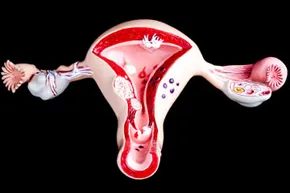
Adenomyosis is a structural disorder of the uterus. Think of it alongside fibroids or polyps. It involves the endometrial cells—the tissue lining your uterus—growing in the wrong place.
Instead of staying in the lining, these cells burrow into the muscular wall of the uterus, called the myometrium.
This isn’t endometriosis. People confuse them. They are related but distinct.
In endometriosis, uterine tissue grows outside the uterus, usually in the abdomen or pelvis. In adenomyosis, the tissue grows into the muscular wall of the uterus itself.
“Adenomyosis is a structural gynecological disorder… opposed to hormonal imbalance or inflammation.”
Why do I have adenomyosis?
We don’t fully know. The cause is fuzzy.
Some theories point to birth. Women who have given birth, especially via C-section, seem at higher risk. Perhaps inflammation during childbirth pushes cells into the muscle layer.
Surgery is another suspect. If you’ve had a fibroid removal, a miscarriage procedure, or any uterine surgery, cells from the lining may have been unintentionally pushed into the myometrium. This is the “invasive tissue growth” theory.
Then there’s the “developmental origins” theory. This suggests some women are born with uterine tissue already misplaced in the muscular wall. It was there from fetal development.
Hormones play a role, too. Adenomyosis is estrogen-dependent. High levels of estrogen, progesterone, prolactin, and FSH can drive it. Once menopause hits and estrogen drops, the condition often resolves on its own.
What are the symptoms of adenomyosis?
The classic signs are heavy bleeding. We’re talking menorrhagia. Blood clots. Severe cramps, known as dysmenorrhea. Painful sex. Bleeding between periods.
Sometimes it forms a mass called an adenomyoma.
But here is the trick. Some women feel nothing. Thirty-five percent of affected women have no apparent symptoms. Others just feel bloated or tender in the pelvis. Mild enough to ignore. Serious enough to impact fertility.
How does adenomyosis impact pregnancy chances?
This is the hard question. Does it stop you from getting pregnant? Does it make you lose the baby?
Research is preliminary. The data is mixed. But the trend is concerning.
Adenomyosis is most common in women aged 40 to 50. Past childbearing years. But 15 to 25 percent of women in their 30s have it too. These are the women trying to conceive.
Studies show women with adenomyosis face higher risks. The risk of miscarriage can double. There is an increased risk of premature labor. There is a higher chance of abruptio placentae, where the placenta detaches from the uterine wall.
Researchers haven’t pinpointed exactly why conception rates drop. They haven’t isolated the mechanism. We know the link exists. We don’t fully understand the biology behind it.
What are the treatment options for adenomyosis?
If you want a cure, there is only one option. A hysterectomy. Removal of the uterus.
For most, that’s not the goal. You want to keep your uterus. You want to get pregnant.
So you manage it. You mitigate symptoms.
Treatments focus on easing pain and bleeding. Hormonal therapies can help. But for those trying to conceive, the path is narrower. You monitor. You treat the symptoms. You hope the structural issue doesn’t derail the pregnancy.
It is a wait-and-see approach. Frustrating. Real.
There is no magic pill yet. Just management. And the hope that modern medicine will catch up to the complexity of the uterus soon.
Medications and hormones for symptom control
Painkillers are the usual first line of defense. Non-steroidal anti-inflammatory drugs (NSAIDs) like ibuprofen help dampen the pain. They can also lighten your period. It’s not a cure but it buys you some breathing room.
Hormonal treatments work differently. Birth control pills, anti-estrogens, and progesterone supplements can shrink an enlarged uterus. Some women find real relief here. The goal is to ease symptoms and maybe reduce the size of the organ causing the trouble.
Trying to conceive? The strategy shifts. Gonadotropin-releasing hormone agonists (GnRH-a) such as Lupron are an option. Aromatase inhibitors are another. These aim to reduce symptoms while preserving fertility. Maybe even improving it. It’s a delicate balance.
Non-surgical and minimally invasive options for fertility
Hysterectomy isn’t the only path. There are surgical alternatives that spare the uterus. Cytoreductive surgery removes the diseased tissue. Laparoscopic surgery is less invasive.
Uterine artery embolization cuts off blood flow to the affected area. This shrinks the damage. Endometrial ablation removes or reduces the lining of the uterus. Each has its place.
Then there’s the newer stuff. Magnetic resonance-guided focused ultrasound (MRgFUS) is non-invasive. It uses concentrated bursts of ultrasound energy. These bursts destroy damaged cells. The surrounding tissue stays safe. It shows promise for women who want to get pregnant. A fertility-restoring treatment without the scalpel.
Adenomyosis and overlapping conditions
Complications arise when other conditions show up. As many as 80 percent of women with adenomyosis also have fibroids or endometriosis. These co-conditions muddy the waters.
It gets tricky. Is the infertility from adenomyosis? Or is it the endometriosis? Or both? Pinpointing the cause is hard when multiple disorders share the same space. Diagnosis becomes a puzzle.
Finding the right treatment means untangling these threads. You can’t treat one in isolation if they’re all talking to each other. It requires careful attention. And patience.