


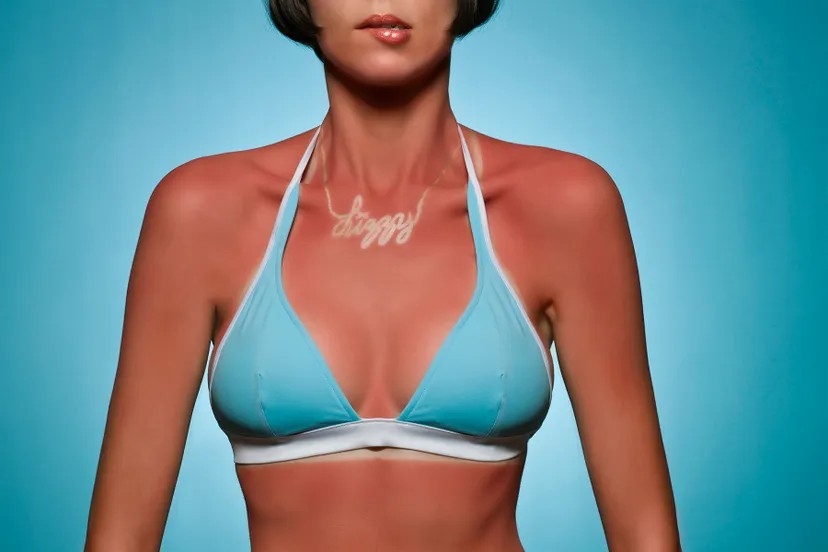


We treat the sun like it has a mind of its own. You step outside for an hour on a bright summer day. Boom. Sunburn. Unless you’ve been strategic. Unless you’ve built up a tan. Then you’re fine. Or so we think.
This logic falls apart fast if you have fair skin. You don’t get a tan. You just get red. So you wear sunscreen. But does that actually make sense? What is sunscreen anyway? What is a tan? Why does a blob of lotion save your hide while forgetting it ruins your afternoon?
It’s not magic. It’s biology. Once you look at how skin and sunlight actually interact, the mystery vanishes. You learn a lot about your body in the process. So let’s start at the beginning.
What is skin, really?
Skin is an organ. It’s one of the most complex ones you have. We don’t think of it that way because we associate organs with things inside boxes. Your heart. Your liver. Your kidneys. Those are clearly organs. Skin feels different. It’s external. It’s the wrapper.
But check the dictionary definition. Merriam-Webster defines an organ as a differentiated structure consisting of cells and tissues that performs a specific function. By that metric, skin wins. It’s made of specific cells and tissues. Its job? To act as the boundary between you and the world.
That’s a tough gig. Unlike your heart, which stays tucked away, your skin has to deal with reality. It’s loaded with sensors. It has a layered design built for abrasion, temperature shifts, and yes, sunlight. It’s the first line of defense. And it takes a beating.
“Skin is the boundary between ‘you’ and ‘the world’.”
So when the sun hits it, something happens. Not because the sun is evil. But because your skin is trying to protect itself.
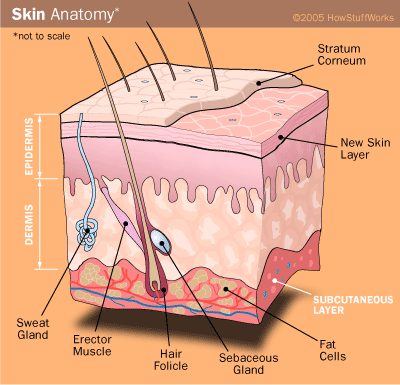

How your skin actually works: dermis vs epidermis
Think of your skin not as a single sheet, but as a busy, multi-layered construction site. You’ve got the epidermis on the outside acting as the barrier. It’s the public face. The dermis sits underneath, packed with all the heavy machinery. We’re talking nerve endings, sweat glands, hair follicles. It’s the engine room.
Beneath that lies the subcutaneous layer. This is where your fat lives, yes, but it’s also where the blood vessels branch out. They fan into the dermis like a complex root system, feeding everything from sebaceous glands to those tiny erector muscles that make your hair stand on end. The dermis is loaded with capillaries. They keep your cells fed. They also help cool you down when you’re overheating.
The epidermis? It has no direct blood supply. It survives on what the dermis provides.
Why your skin feels heat, cold, and pain
The dermis is where the sensory action happens. It’s not just structural support. It’s wired to let you know exactly what’s touching you. Or burning you.
Your nerve endings are specialized. You have receptors for:
- Heat
- Cold
- Pressure
- Itch
- Pain
These aren’t just random sensors. They’re your early warning system. They tell you to pull your hand away from a hot stove before you get seriously burned. They warn you of a puncture. Without them, you’d be walking around in complete sensory isolation, damaging your skin without even knowing it.
The truth about dead skin cells and keratin
The epidermis is your interface with the world. And it’s weirdly fascinating. It’s split into two main zones: the inner living layer and the outer dead layer.
The dead cells are what you actually see. They flake off constantly. You probably don’t notice it, but you shed millions of these every day. They’re replaced by new cells pushing their way upward from below. It’s a conveyor belt of sorts.
The living inner layer is called the malpighian layer. This is where the sun actually hits you when you tan. It’s directly connected to the dermis, which feeds it. The malpighian layer itself has distinct sub-layers:
- The basal layer sits right against the dermis. This is where basal cell carcinoma starts if things go wrong.
- Above that is the spinous layer.
- Then the granular layer.
Sitting on top of all that is the stratum corneum. This is the outermost layer of dead cells. It’s tough. Really tough. These cells are packed with keratin.
Keratin is the same protein that makes up your fingernails, hair, and even animal hooves. It’s incredibly strong. Your visible skin is basically a thin, flexible version of your fingernails. That’s what gives you protection. On your palms and soles, where you get the most abrasion, this layer is much thicker. Evolution has a sense of humor.
Why you tan (and why it’s risky)
Living among the basal cells in the malpighian layer are melanocytes. These are the cells responsible for your skin color. They produce melanin, the pigment that creates a tan.
Here’s a common misconception. When you tan, your body isn’t creating more melanocytes. You’re not adding new factories. You’re just making the existing ones work harder.
“Colour differences are due solely to the amount of melanin produced and the nature of the pigment granules. When the skin becomes tanned on exposure to sunlight, the melanocytes do not increase in number, only in activity.”
The number of melanocytes is roughly the same across all human races. The difference lies in how much melanin they produce and how it’s packaged. Blonde whites have just as many melanocytes as darker-skinned individuals. It’s about output, not inventory.
But this mechanism has a dark side. Those same melanocytes are vulnerable to UV radiation. Repeated sun exposure causes damage. It leads to mutations. Those mutations can turn into melanoma, a serious form of skin cancer. So that tan you’re chasing? It’s literally a sign of cellular distress. Your skin is trying to protect itself from the very thing that’s potentially killing it.
How the Stratum Corneum Acts as Your Skin’s Armor
Right against the dermis sits the basal layer. If the term basal cell carcinoma sounds familiar, this is where that specific cancer begins. It’s the foundation.
Above that is the spinous layer. Then the granular layer.
Finally, you hit the stratum corneum. This is the outermost layer. The dead cells. The part of the skin people actually see. These cells are packed with a protein called keratin.
Keratin is fascinating. It’s the structural protein that gives strength to horns, hair, hooves, fingernails, and feathers. The same tough material that forms your fingernails makes up your visible skin, just in a thinner, more flexible version. That’s what makes skin resilient. In high-friction areas like palms and soles, the stratum corneum gets significantly thicker to handle the abrasion.
Why Melanocytes Determine Skin Color and Cancer Risk
Living among the basal cells in the Malpighian layer are melanocytes. These cells produce melanin, the pigment responsible for tanning. They are the source of your tan.
“The appearance of the skin is partly due to the reddish pigment in the blood of the superficial vessels. In the main, however, it is determined by melanin, a pigment manufactured by dendritic cells called melanocytes… Their numbers in any one region of the body… are roughly the same within and between races; the blondest whites have as many as the darkest blacks. Colour differences are due solely to the amount of melanin produced and the nature of the pigment granules.”
The key takeaway? Everyone has roughly the same number of melanocytes. The difference lies in how much pigment they produce and the type of granules they create. When you tan, melanocytes don’t multiply. They just work harder.
Melanocytes also produce two types of pigment: eumelanin (brown) and phaeomelanin (yellow/red). Redheads produce more phaeomelanin and less eumelanin. This is why they struggle to tan. In albinism, the enzyme Tyrosinase is missing. Without it, the chemical pathway stops. No melanin is produced in skin, hair, or irises.
There is also Melanocyte-stimulating hormone (MSH) produced by the pituitary gland. MSH travels through the blood to tell melanocytes to produce more melanin. The pituitary gland is connected to the optic nerve, allowing it to sense light. This connection explains why light exposure affects hormone production. In chickens, extra light stimulates the pituitary to produce hormones essential for egg laying. In humans, light stimulates MSH production.
Wearing sunglasses might actually make you more susceptible to sunburn. By blocking light from entering the eyes, you might reduce the signal to the pituitary gland to produce MSH. Less MSH means less melanin production. It’s a counterintuitive side effect.
Why Sunburn is Actually Skin Damage
For Caucasians without a tan, skin cells lack protection from UV radiation. You become an easy target for sunburn. The result is red, painful skin. In severe cases, blisters form.
Sunburn isn’t just a surface reaction. It is damage. UV radiation injures the cells, and the body responds to that injury. The redness and pain are signs of that response.
Why your skin turns red after a sunburn
Let’s be clear. A sunburn isn’t just redness. It is a delayed inflammatory response. Specifically, it is ultraviolet B-induced erythema. The pain and color peak between 8 and 24 hours after you step into the sun. Why the delay? Because the damage happens on a cellular level first. Reactive oxygen species and photochemical reactions attack DNA. Then the body panics. It increases blood flow to the dermis. Capillaries dilate. Fluid leaks out. That is the edema. That is the heat.
Biologic response modifiers released by keratinocytes and lymphocytes drive this process. Prostaglandins are key players here. If you see erythema, you have failed at sun protection. It is a marker of severe UV damage.
The link between sunburn pain and skin cancer risk
This isn’t just about discomfort. There is a direct line between that red, peeling skin and cancer risk. Pyrimidine dimers form in your DNA when UV hits. The wavelengths that cause erythema are the same ones that create these dimers. A rough correlation exists. More dimers mean higher susceptibility to burning.
From a scientific standpoint, a sunburn signals substantial over-exposure. And that matters. History of repeated, severe sunburns links directly to increased risk for melanoma. It also raises the stakes for non-melanoma skin cancer. The inflammation is the warning sign. The DNA damage is the hidden threat.
A sunburn is best viewed as a total failure of sun protection.
How sunscreens actually work
Sunscreens do one of two things. They block or they absorb.
Blocking is simple physics. Think of the white zinc oxide paste lifeguards slap on their noses. It is opaque. It reflects UV light away. Absorption is chemical. The sunscreen molecule takes the energy hit instead of your skin. Melanin does this naturally. Sunscreen chemicals mimic that function.
You need to know what is in the bottle.
- PABA (para-aminobenzoic acid) absorbs UVB. It is common but tricky. If you have sensitive skin, it might cause irritation or an allergic reaction. Proceed with caution.
- Cinnamates absorb UVB.
- Benzophenones absorb UVA.
- Anthranilates handle both UVA and UVB.
- Ecamsules (also known as Mexoryl SX) absorb UVA.
Understanding SPF and application mistakes
The number on the bottle is the Sun Protection Factor. It acts as a multiplier. If you burn in 10 minutes without protection, an SPF 10 gives you 100 minutes. The math is straightforward. The application is where people fail.
You must apply enough. And you must keep it there. Apply it 30 minutes before sun exposure. This allows the product to bind to your skin. If you go straight from the bottle to the ocean, it washes off. It does not work if it is not on your skin.
There is a catch. The SPF rating only applies to UVB radiation. It tells you nothing about UVA protection. That is why the chemical list matters. You need broad-spectrum coverage.
The rise of Mexoryl SX in the US market
For years, the US lagged in UVA protection options. That changed in July 2006. The FDA approved Mexoryl SX (ecamsule) for sale. It had been available in Europe and Canada for over a decade under the brand Anthelios SX by L’Oreal.
Dermatologists call it the best sunscreen in the world. Why? It blocks UVA rays more effectively than other options on the market. UVA rays penetrate deep. They cause aging and cancer. Blocking them is as important as blocking UVB burns.
The skin as an active organ
It is fascinating to look at your skin as an organ rather than a wrapper. It responds to sunlight in complex ways. It repairs damage. It signals pain. It protects you. Or it fails to.
We often treat sun exposure casually. We chase the tan. We ignore the burn until it hurts. But the biology is clear. Every red patch is a story of cellular distress. Understanding that changes how you apply your sunscreen. It changes how you view the sun.
The next time you reach for that bottle, remember the chemistry. Remember the DNA. Protect the organ that protects you.


