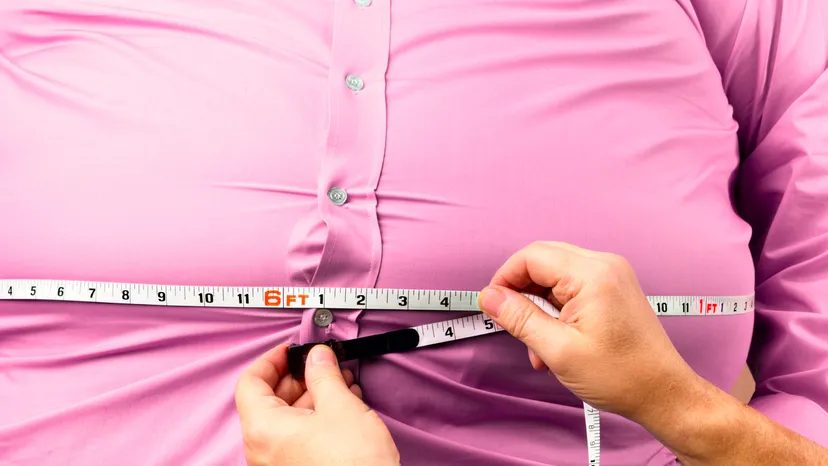
We are living in the middle of an obesity epidemic. The CDC has officially labeled it as such, and the numbers are hard to ignore. Roughly 65 percent of Americans fall into the overweight or obese categories. The financial hit is staggering, too. Health care costs tied to obesity exceed $117 billion every year, according to the National Institute of Diabetes and Digestive and Kidney Diseases.
There are serious health stakes involved. Being obese increases your risk of premature death by 50 to 100 percent compared to those at a normal weight. It is also a major risk factor for high blood pressure, heart disease, and type-2 diabetes.
Yet, there is a confusing counterpoint known as the obesity paradox. Some recent studies suggest that obese individuals with chronic diseases sometimes have better survival rates than their normal-weight counterparts. This has led some to wonder if the worry is overblown. But before you reach for another doughnut or decide that diet culture is just noise, let’s get concrete about what obesity actually means.
Understanding Body Composition
Obesity isn’t just about being heavy. It’s about excess body fat. Overweight refers to excess body weight, which includes bone, muscle, and fat. The distinction matters because body composition varies significantly by gender. Women naturally carry more body fat than men.
For context, scientists generally define obesity as:
– More than 30 percent body fat in women
– More than 25 percent body fat in men
Measuring that percentage precisely isn’t easy. Scientists can use X-ray absorption techniques or underwater weighing. These methods rely on the fact that fat tissue has a different density than muscle or bone. They are accurate. They are not practical for your routine doctor’s visit.
The BMI Formula
So, how do primary care providers estimate obesity in a busy clinic? They use practical metrics like height, weight, and skin-fold thickness. The most popular and convenient method is the body mass index (BMI ).
BMI is simply a ratio of your weight to your height. It is not a perfect diagnostic tool, but it is a widely used screening measure. Here is how you calculate it.
If you use English measurements (pounds and inches), the formula is:
BMI = weight (lb) / [height (in)]^2 x 703
If you prefer metric units (kilograms and meters), the formula simplifies to:
BMI = weight (kg) / [height (m)]^2
Reading Your Number
Let’s look at a specific example. Consider a woman who is 5 feet 5 inches tall and weighs 150 pounds.
Her BMI is 25.
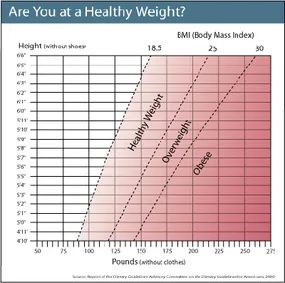
According to standard categories, she is classified as overweight, not obese. The cutoff for obesity is a BMI of 30. Here are the general categories you will see on most health charts:
- Less than 18.5 = underweight
- 18.5 to 24.9 = normal weight
- 25 to 29.9 = overweight
- More than 30 = obese
You can find countless online charts to help you categorize your weight based on these calculations. But remember, BMI is just a starting point. It doesn’t tell you where that weight is sitting on your

The Uncomfortable Truth About Weight and Health
Let’s get straight to the data. Obesity doesn’t care who you are. It hits men and women across every racial and ethnic group, though the numbers don’t lie: women are statistically more likely to be affected than men. In the US, the burden falls heaviest on African-American communities, followed by Mexican-Americans and non-Hispanic whites. It’s not just an adult problem either. Between 11 and 28 percent of children carry this weight, mirroring the same demographic patterns we see in the adult population.
The physical toll is brutal and well-documented. Carrying excess weight isn’t just about how you look; it’s a catalyst for serious disease. It spikes your risk for hypertension, cardiovascular disease, stroke, certain cancers, gallbladder issues, and type 2 diabetes. Inside your veins, it’s worse. High levels of cholesterol and lipids circulate freely, building up atherosclerotic plaques. These plaques narrow your arteries. The result? Higher blood pressure, heart attacks, and strokes. Obesity is, frankly, a known risk factor for heart failure.
But here is where the science gets weird. Because the link between weight and heart disease seems so obvious, researchers were confused when they started seeing the opposite happen in some clinical trials. This contradiction led to what is now called the obesity paradox research finding.
Why the Paradox Exists
Scientists didn’t just accept the standard narrative. They dug into the data to see why some patients with higher Body Mass Index (BMI) seemed to survive heart failure or severe illness better than those at a “normal” weight. The discovery wasn’t that being overweight is good for you. It’s that the relationship is more complex than a simple cause-and-effect line.
Early studies suggested that in patients with chronic conditions like heart failure, those with a higher BMI had lower mortality rates. This wasn’t true for the general population, only for specific patient groups. Why? Several theories emerged. One is that extra body fat provides a metabolic reserve during the stress of severe illness. Another is that some of these patients may have higher muscle mass alongside the fat, which supports heart function.
It’s not a license to gain weight. The obesity paradox remains a subject of intense debate. Critics argue that the studies often fail to account for “smoking cessation” or pre-existing chronic disease, which can cause weight loss before the illness even starts. This creates a bias where sicker people appear thinner.
Yet, the discovery forced a shift in how doctors look at weight. It’s no longer just a number on a scale. It’s about muscle mass, fat distribution, and metabolic health. Understanding how the obesity paradox works helps doctors personalize treatment. For some, aggressive weight loss might be risky during acute illness. For others, maintaining a healthy weight is still the best defense against cardiovascular disease.
The lesson isn’t to ignore health. It’s to realize that human biology is messy. The path to wellness isn’t a straight line, and sometimes the data tells a story that contradicts what we think we know.

The Data Doesn’t Tell the Whole Story
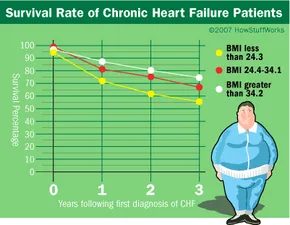
The puzzle deepens when you look at the mechanics behind the numbers. In 2001, A. Mosterd and a team of Dutch researchers dug into the prognoses of over 5,000 patients diagnosed with heart failure. The results were counterintuitive. Patients carrying lower body mass indices (BMIs) and suffering from low blood pressure faced higher rates of in-hospital death compared to their counterparts with higher BMIs.
This wasn’t an isolated incident. Mosterd’s team noted that their data echoed findings from a 1993 study in Massachusetts. Since then, at least eight additional studies have reinforced this trend. It creates a confusing picture: we know obesity is a primary risk factor for heart failure, yet the data suggests that once you are in the system, carrying extra weight might actually be protective.
Beyond the Heart: The Kidney Connection
The phenomenon isn’t limited to cardiac issues. It shows up starkly in chronic kidney disease (CKD). Most patients with advanced CKD rely on hemodialysis—a process where a machine filters waste from the blood. It is a brutal routine. About 20% of dialysis patients die each year, typically from cardiovascular complications.
Researchers at UCLA Medical Center examined survival rates among these patients. The correlation was clear. Dialysis patients with higher BMIs had a significantly better chance of survival than those with lower BMIs.
Redefining the Rules of Treatment
If we accept these findings at face value, the “obesity paradox” flips conventional medical advice on its head. Obesity drives hypertension, congestive heart failure, and coronary artery disease. It is a major contributor to chronic renal disease. Yet, in patients who already have these conditions, obesity appears linked to longer life.
The implications are messy. If true, doctors might need to reconsider their standard protocols. The instinct to prescribe strict diets and weight-loss regimens for every patient with a chronic condition might be doing more harm than good. But before we throw out the scale, we need to understand what is actually driving these statistics.
Correlation Is Not Cause
Here is the catch. Every study cited so far relies on statistical analysis of large databases. These tools reveal associations. They show patterns that exist after the fact. They do not prove cause and effect.
To truly understand why this happens, we would need controlled variables. We need animal studies. We need clinical trials where researchers can isolate specific factors and remove the noise. Until then, we are looking at shadows on the cave wall, not the objects casting them.
“Statistical analyses reveal associations, but they don’t demonstrate cause and effect.”
Why Does It Happen?
So, why does the obesity paradox exist? Is it biological? Is it statistical bias? The answer lies in the next layer of complexity.

Why the Obesity Paradox Might Be a Fluke
The medical community remains deeply divided over the so-called obesity paradox. It’s a concept that suggests carrying extra weight might actually protect certain patients with chronic conditions, a finding that directly contradicts standard public health advice. Naturally, many physicians and scientists are skeptical. They argue that these results don’t align with what we see in the general population.
Researchers from the University of Texas School of Public Health and Baylor Medical College recently sifted through existing literature. They didn’t just accept the data; they looked for cracks in the foundation. Their review identified six specific reasons why the obesity paradox might be less of a biological truth and more of a statistical illusion.
Small Sample Sizes and Weak Statistics
The first red flag is scale. The studies cited in support of the paradox often relied on relatively small groups of people. When you test a theory on a small sample, the results can look dramatic but lack statistical power. Do these findings hold up when applied to massive, diverse populations? Probably not.
Then there’s the issue of correlation versus causation. Standard statistical techniques can show that two factors are linked, but they cannot prove that one causes the other. The link between higher body mass and better survival in these studies may be coincidental rather than causal.
Flawed Diagnosis Methods
How researchers diagnose congestive heart failure (CHF) matters immensely. In many of these pivotal studies, diagnosis wasn’t confirmed through rigorous lab tests like echocardiography, cardiopulmonary testing, or cardiac catheterization. Instead, doctors relied on clinical symptoms: difficulty breathing, swelling in the extremities.
Here is the problem: these clinical criteria have not been validated specifically for obese populations. Fat can mask symptoms or mimic them. If the diagnostic tool doesn’t work for the body type being studied, the resulting data is suspect.
Disease Severity and Wasting
When lab tests were used, a pattern emerged. Obese patients often showed slightly better heart function—better pumping ability and oxygen delivery—than their normal or underweight counterparts. This suggests they weren’t just heavier; they were potentially in an earlier, less severe stage of heart failure.
But there’s another layer. Conditions like CHF and chronic kidney disease are “wasting diseases.” As patients get sicker, they lose weight. They lose fat and muscle mass involuntarily. This creates a confusing snapshot: a patient with a low BMI might appear healthy on paper, but that low weight is actually a symptom of advanced, terminal illness.
The studies rarely distinguished between intentional weight loss (through diet and exercise) and unintentional weight loss (due to disease progression). If you don’t separate the two, you might mistake a dying patient’s weight loss for a healthy body composition. This means obese patients weren’t necessarily “protected”; they were just earlier in the disease trajectory.
Metabolic Reserve and Extreme Obesity
Obese patients may possess a better metabolic reserve. Think of it as having a larger buffer against the stressors of illness. Underweight patients have less of this buffer.
However, the data gets messy at the extremes. Very few studies focused on extreme obesity, defined as a BMI greater than 35. In the few cases where this group was included, they did not show the same survival advantage as the mildly overweight. This suggests the relationship isn’t a straight line. It might be U-shaped.
Normal and overweight patients could have the best survival probabilities. Those at the extremes—underweight and extremely obese—face higher risks. The paradox might simply be highlighting the danger of being underweight, while ignoring the dangers of extreme obesity.
Is BMI Even the Right Measure?
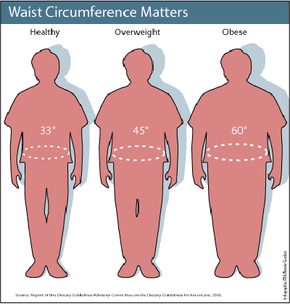
Perhaps the entire discussion is built on a flawed metric. BMI is a crude calculation based on height and weight. It doesn’t measure where fat is stored. Some experts argue that waist circumference or waist-to-hip ratios are better indicators of health risk.
Visceral fat—the fat stored deep in the abdomen around the organs—is far more dangerous than subcutaneous fat stored elsewhere. Two people can have the same BMI, but if one carries fat around their waist and the other carries it on their hips, their health risks differ significantly. If the studies didn’t account for this distribution, they may have misclassified “healthy obesity” as “unhealthy obesity” or vice versa.
The debate isn’t over. These criticisms don’t prove the obesity paradox is false, but they do suggest we need more rigorous, nuanced studies before we rewrite the guidelines.


Why Weight Might Be Saving These Patients
The obesity paradox is a messy concept, and plenty of people have reason to doubt it. But UCLA researchers are digging into the biology to see if there’s a logic to the chaos.
Think about the timeline. The damage from obesity builds up slowly. It’s a long, grinding wear and tear. Chronic conditions like heart failure or kidney disease move much faster. In these acute scenarios, the immediate threat isn’t extra pounds. It’s wasting. Muscle loss. Malnutrition. These things kill people quickly. Obesity, by contrast, buys time. It’s a buffer.
In heart failure and chronic kidney disease, inflammation is constant. Nutrition is often poor. In that context, carrying extra weight might signal something positive: better reserves. Better food intake. If a patient is gaining weight, they might actually be healthier than a thin patient who is losing ground.
The Case for Reverse Epidemiology
Dr. Kalantar-Zadeh pushes back against standard advice. He argues that forcing dietary restrictions on these sick patients could be doing more harm than good. This is the core of reverse epidemiology.
Standard guidelines say: lose weight, cut calories, restrict sodium. That works for the general population. It doesn’t always work for the chronically ill. For them, the usual risk factors don’t apply. Imposing strict diets on obese patients with heart failure or kidney disease might strip away the very protection keeping them alive.
Evidence Is Still Thin
We’ve seen this pattern in clinical settings. It’s real enough to notice. But scientists aren’t convinced it’s a universal truth.
Why? Because we lack hard proof. There are no direct animal studies. No clinical trials that can prove cause and effect. We can’t look at this data and say the paradox is definitively real. Not enough to go changing how doctors treat heart failure or kidney disease right now.
But the debate is heating up. Many researchers believe we need to tackle this head-on. If the paradox holds up, it could completely reshape treatment options. It would mean stopping the automatic push for weight loss in vulnerable patients.
The current consensus is cautious. Don’t change the standard of care yet. But keep watching. The data suggests that what kills a healthy person might save a sick one. Or maybe it’s just that the sick are too frail to handle the strict rules we impose on them. We’ll see.
The Obesity Paradox: Why Extra Weight Might Sometimes Help
You’ve heard the advice. Eat less, move more. Keep your BMI in check. It’s the golden rule of health. But then you hear stories. Stories about people who are overweight surviving heart attacks better than those who are thin. Or patients with kidney disease living longer with a few extra pounds. It feels counterintuitive. It feels wrong.
So, does carrying extra weight actually protect you?
This isn’t just about willpower. It’s about the obesity paradox. A complex phenomenon where higher body mass seems linked to better outcomes in certain serious illnesses. It’s messy. It’s confusing. And it challenges everything we think we know about weight and health.
How It Works in Heart Failure and Kidney Disease
Let’s look at the data. Specifically, in patients with chronic heart failure or advanced kidney disease. Researchers have noticed something strange. These patients often have a “protective” effect from being overweight.
Take dialysis patients. Studies show that those with higher body mass indexes sometimes have lower mortality rates. This is known as reverse epidemiology. In a healthy person, high cholesterol and high blood pressure are bad. In someone with severe kidney failure, the rules change. Low weight can be the real risk factor. Why? Because being thin in these conditions often signals muscle wasting and malnutrition. The body is eating itself.
“In persons with advanced chronic kidney failure, altered risk factor patterns emerge where traditional markers of health behave oppositely.”
It’s not that fat is good. It’s that thinness can be a sign of advanced disease. The extra mass acts as a buffer. A reserve. When the body is under extreme stress, that reserve matters.
The Heart Attack Question
Then there’s the heart. Do obese people really fare better after heart attacks?
Some research suggests yes. Patients with coronary artery disease and higher BMI often survive initial events better than their thinner counterparts. This is the obesity paradox in heart disease. But don’t pack away your cardio gear yet.
This isn’t a free pass. The “obesity paradox” has limits. It applies to specific, sick populations. It does not apply to everyone. For the general population, excess weight still increases the risk of developing the very conditions that make weight “protective.” You don’t want to get heart failure to benefit from being overweight. That’s a terrible deal.
The key is body composition. Muscle protects. Fat, especially visceral fat, harms. A person with a higher BMI who is also muscular may fare better than a “normal” weight person with sarcopenia (muscle loss) and high fat. The scale doesn’t tell the whole story.
Why the Confusion?
Why do some studies contradict others?
Meta-analyses often show different results. Some find a clear benefit to higher weight in sick patients. Others find no link. The difference often lies in how obesity is measured. BMI is blunt. It doesn’t distinguish between muscle and fat. It doesn’t account for where the fat is stored.
“Diagnostic performance of body mass index to detect obesity in patients with coronary artery disease remains limited.”
When researchers adjust for smoking, socioeconomic status, and illness severity, the “paradox” sometimes shrinks or disappears. Smokers tend to be thinner and sicker. This skews data. If you don’t account for that, smoking looks protective because smokers lose weight as they get sick.
What This Means for You
So, what do you do with this information?
- Don’t ignore weight. If you are generally healthy, excess weight is still a risk factor for diabetes, hypertension, and heart disease. The paradox applies to the sick, not the well.
- Focus on function. Can you walk up stairs? Do you have strength? Muscle mass is a stronger predictor of survival than BMI in many chronic conditions.
- Context matters. If you have heart failure or kidney disease, your doctor will look at more than just your waistline. They look at nutrition, muscle mass, and inflammation.
- Beware of oversimplification. The obesity paradox is a statistical observation, not a lifestyle recommendation. It’s a clue for doctors, not a license to gain weight.
The science is still evolving. We are learning that health is not a single number. It’s a web of interactions. Weight is just one thread.
It’s messy. There are no clean answers. But understanding the nuance helps. It stops the shame. And it starts the real work.
The story isn’t over. We’re still learning how to balance these conflicting signals. One step at a time.