


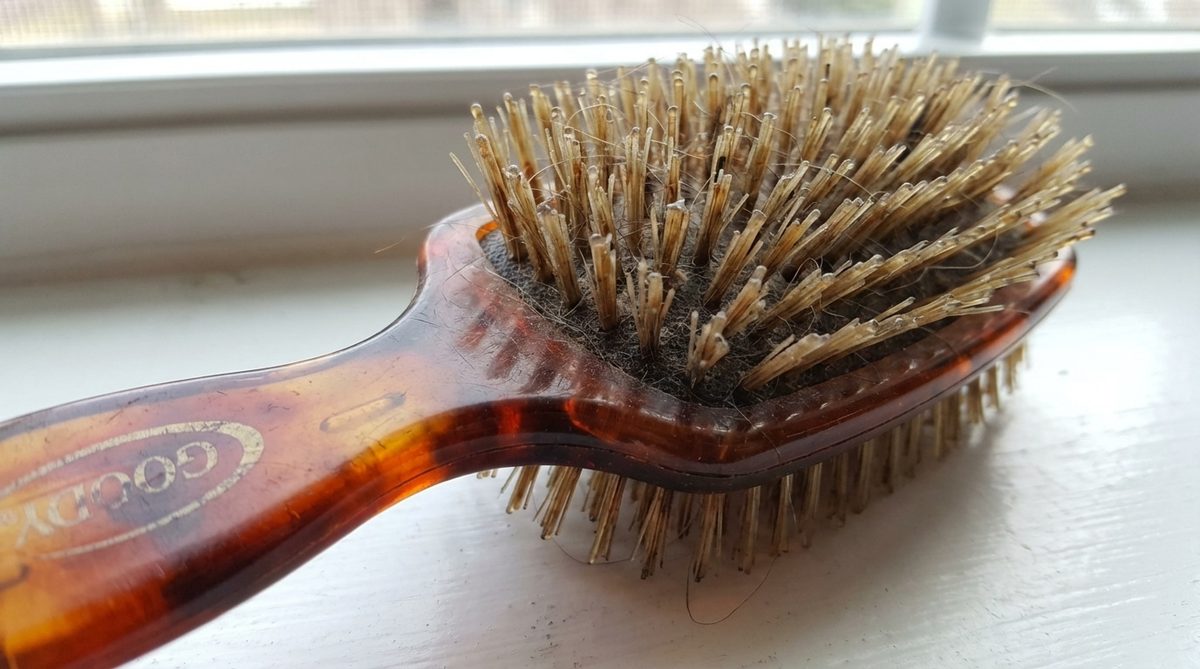
It’s the same battle every morning. If you look in a mirror, you will see that there is static electricity that opposes gravity. Each blow brought an eerie crackling sound. Then leave a handful of yarn in the sink as an offering. I thought it was just my curse. A natural state that is beyond control. That’s when I realized my hair wasn’t to blame. This is a tool in my hand.
At the end of January 2026, the air is dry in winter. The air in a heated room is even drier. This combination seriously damages our hair. We blame the climate. We tend to blame the shampoo. But the real problem lies in the bathroom drawer. Standard brushes are mostly synthetic. They are far from flawless when it comes to hair health. It’s time to find out why this everyday accessory is quietly sabotaging our quest for smooth, dreamy hair.
Plastics dominate the beauty industry. Why? Production costs are low. However, these physical properties are in direct conflict with the biological structure of hair. Unlike natural materials, plastic has no affinity for keratin. It acts as an attacker. It doesn’t work as an ally. Understanding these mechanisms of friction and tension is the first step towards respectful practice. Something that actually works.
How static electricity lifts cuticles and dull hair
Static electricity is the worst scourge of synthesis tools. When hair fibers are rubbed with plastic, a well-known physical phenomenon occurs. Electronic mixing. The strands of hair repel each other. They stand on their heads.
This looks bad. But this would have devastating structural effects. Static electricity opens and lifts the hair’s cuticles (scales that are supposed to be flat and close to protect the cortex). When these scales rise, the hair loses its ability to reflect light. As a result, the hair becomes dull, coarse and brittle.
Cold weather and air pollution are likely damages. More messes. When you try to straighten your teeth, you brush them harder. This creates more static electricity. This is a vicious circle. In this dry winter, the interaction between air and plastic turns the design into an electrical nightmare.
Length that allows penetration without a visible parting line
There are other dangers. Usually invisible to the naked eye. The key is in the manufacturing process of cheap brushes. Most of them are made by injection molding. If you look closely at the plastic hairs under the lens, you’ll usually see split lines on the axis. In some cases, it can even extend into a small ball designed to protect the scalp.
This molding residue, however small, acts like a miniature razor blade.
This rough edge catches the cuticle every time it passes through your hair. They weaken the structure. Finally, they can see through the hair shaft. result? Premature split ends. The length becomes thinner. Visible damage during disassembly. It’s not just the power you use. This is the repetitive friction of an irregular surface against fragile fibers. Removing such defective tools is very important for preservation.
We’ve all been there. You pick up a brush, comb your hair and suddenly you have a coat made of static electricity. This is not magic. This is physics. Therefore, replacing wood with plastic feels less like a lifestyle improvement and more like an immediate hair health fix.
The transition from synthetic materials to natural wood is not a temporary trend. This is technically necessary. Wood is carbon based. Your hair is carbon based. Plastic is a polymer derived from oil. There is a huge gap between hair and plastic. There is almost no gap between the hair and the wood.
The difference held by the brush of the wooden handle is the weight. It is denser. I feel very grounded. No need to snap your wrists violently. You don’t fight the tools. you work on it. This is the first step to ending the cuticle war.
Neutral Zone: How wood stops static electricity before it builds up
Plastic is an insulator. Traps the charge. Pulling the nylon bristles over the keratin fibers actually creates a battery. This friction creates static electricity. This static electricity makes your hair frizzy, unmanageable and easily fly away from your face like a chaotic halo.
Wood is different. It is electrically neutral.
It does not conduct electricity in a way that stores charge. No static electricity is generated even if it rubs against your hair. Instead, dissipate static charge. If you’ve ever experienced the shock of winter static electricity, such as a scarf, wool hat or dry air, a wooden brush can act as a buffer. It breaks the cycle.
“It’s not about adding products, it’s about removing the friction that caused the problem.”
This is important because static electricity can lift the hair cuticles. When the cuticle is lifted, the light is dispersed. Your hair looks dull and boring. When the cuticle is flat, light is reflected. The wood keeps the cuticles flat. It is also hypoallergenic. Friction does not generate heat. Plastic brushes actually heat up the hair shaft due to the rapid friction. The wood stays cool. Hair stays moisturized.
Visual change: Instant glow without serums
You don’t have to wait weeks to see the difference. The changes came immediately.
When you brush your teeth with a wooden tool for the first time, you will notice that your hair will fall out. It doesn’t float. It went down. It fits together. These strands are adjacent rather than repelling each other. This creates a smooth surface.
Smooth surfaces reflect light.
This is the origin of “natural shine”. Not made of silicone. We don’t use heavy oils that stress your hair. It is achieved by mechanical smoothing of the surface. The wood slides over the shaft and seals the cuticle. The result is controlled volume rather than flattening, and fluffiness is controlled by physics rather than chemicals.
This proves a simple point. Hair beauty is often just mechanical care. It looks expensive when handled gently.
The Structure of Structure: Why Spacing Matters More Than Density
Most industrial brushes fail at their most important task of removing tangles without breaking the bristles. Looks impressive on the shelf. High density nylon bristles. Fluffy fur. It looks very soft.
Softness is not the goal. What is efficiency?
The real secret to a tangle-free head lies in the texture of the hair. Especially spacing and stiffness.
**Wide intervals are not negotiable. **
When the hairs are too dense, they act like a hard wall. Pushing a thick brush into the knot prevents hair from getting inside. They oppose tension. Power is transmitted to the roots. You pull. You pull. The knot tightened. My hair is falling out.
A brush with spaced pins can divide large amounts of hair into larger sections. Pins “go through” the hair instead of against it. The space between the pins allows the hair to move sideways when it hits an obstacle. It slips out of the knot. It won’t break.
This is essential for curly, wavy or thick hair. These textures tend to tangle easily. A thick brush creates a “frizz effect” that gives hair volume and makes it more messy. Spaced tree brushes define curl patterns and remove tangles with minimal tension.
Hard pin and flexible plastic: sliding effect
Hair flexibility is often advertised as “gentle”. it is not. This is ineffective.
The soft plastic bristles bend when resisted. Then they snap back. This spring action can cause damage. It also creates resistance.
Wooden or metal pins increase rigidity.
Wooden pins are often polished to a shine or shaped into a teardrop shape. These are carved from a single material and not glued together. So there are no weaknesses. There are no glue lines to catch split ends. The surface is smooth.
Metal pins are often coated to prevent rust and further reduce friction. Eliminates heat and static electricity faster. It slides.
If you use hard pins, they won’t hit your hair. You run it. The pins separate the strands precisely. Nothing prevents. No snagging. It removes tangles from tip to root in just one smooth glide without causing pain to the roots.
This combination of materials and construction makes all the difference. You stop combing your hair. You start to care about it.
The differences are small at first. Well, there’s no denying this. You can keep your hair in condition for longer. It feels light. You have less time to fight in the morning.
However, there is always more information about what your hair really needs and what you think it needs. The routine continues. Tools change. The results are as follows.
Why wooden brushes and metal brushes are perfect for scalp spas
Stop treating your hair like a chore. It’s a ritual. A hardwood or metal bristle brush makes all the difference. You go from seeking pain relief to seeking deep relaxation. Turn your bathroom into a mini spa. The daily hustle and bustle slows down.
This feeling is new. It is the rediscovery of sensation. And it feels good.
Effectively stimulates microcirculation to promote growth
The hard bristles work like acupressure. Soft plastic bristles can crush. Wood and metal are compact, but comfortable. Massage deep into the epidermis. This mechanical stimulation promotes blood microcirculation in the hair bulb.
Increased blood circulation increases oxygen and nutrients. The roots are nourished. This leads to active and healthy growth. Brush in circular motions or head down. Gives oxygen to the scalp. Pull out the roots. It can prevent hair loss from a “lazy” scalp. This is a free natural hair loss treatment. Do this once in the morning and once in the evening.
A feeling of relaxation incomparable to nylon bristles
Don’t underestimate its relaxing effects. The scalp is full of nerve endings. That’s where the pressure rises. The wood’s hair forms repeated channels, giving it an organic, warm feel. Provides immediate pain relief. Think of it like a spider rubbing your head.
You can’t experience this feeling with thin, flexible nylon bristles. It hurts. They don’t do massage. Brushing your teeth becomes a moment to connect with yourself. Relieve stress in minutes.
How the tree distributes tallow to dry edges
Nature is smart. Tali is often wrongly demonized. It is not a stain that should be wiped away. This is the best treatment for protecting hair fibers. It is a complex natural oil. Biocompatible. Its function is to moisturize and protect the hair.
question? Bad distribution. Oily roots. The edges are dry and resemble straw. A wooden brush can be used to correct this imbalance. Turn your “sticky hair” into an intensive long treatment.
Wood as a conductor of natural oils
Wood is porous. It absorbs it. When brushing, the wooden bristles remove excess sebum from the scalp. This oil moves slowly down. It reaches length and tip. This is where it is most needed.


