Chris Young broke a sacred kitchen law.
Cook from frozen, he said.
My first thought? Heresy. But I worked the line in a Philly casino years ago, pounding out hundreds of burgers nightly. We cooked every single patty from frozen.
Was it lazy? No. It was consistent.
No thawing mess. No raw meat sliding around the walk-in fridge turning gray by Thursday. The burgers cooked fast, held their shape, and somehow came out juicier than the ones we’d let sit at room temperature. I didn’t know why then. The science eluded me. I just knew the plate cleared.
Now I know.
The Science of the Lag
Heat makes muscle fibers clamp down. Specifically, the myofibrillar proteins contract. Think of a fist squeezing a water balloon. The juice pops out.
That’s how most burgers die.
When you grill a cold-but-thawed burger, that squeezing happens too soon. By the time the outside sears, the inside is already leaking.
Start with frozen meat? You buy time. The center stays cold while the exterior takes a beating from the fire or griddle. The “thermal lag” postpones the squeeze.
Young put it plainly: “Frozen meat gives you a noticeable bump juiciness.”
Because it skips the warm, weeping phase. It stays solid longer. The crust builds before the insides betray the structure.
Frozen vs. The Fridge: A Head-to-Head
I had to see it to believe it. I ran two tests. Same beef. Same hands. Two conditions: freezer-burned hard vs. fridge-cold.
Test 1: The Cast Iron Griddle
The heat was fierce.
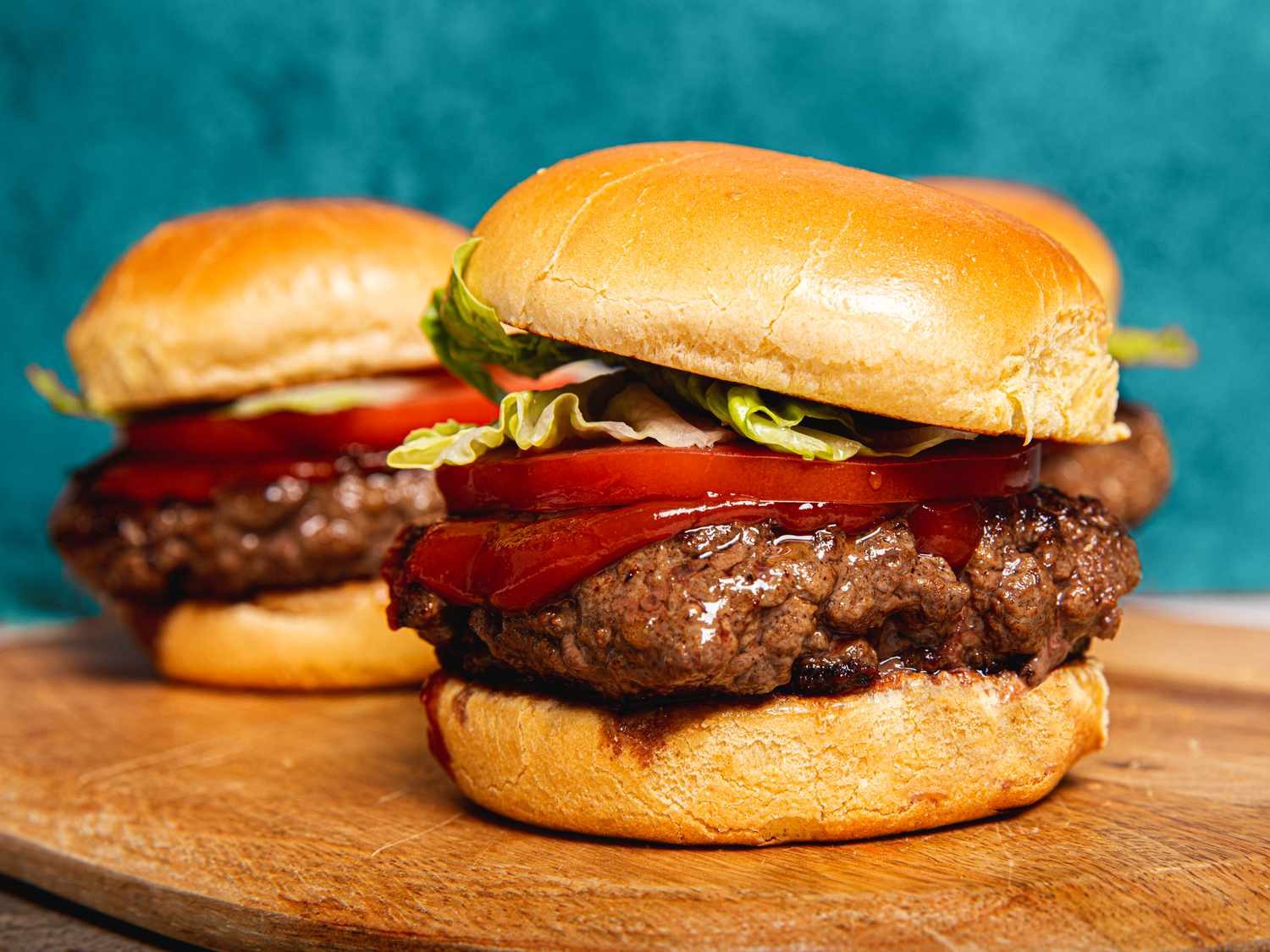
The frozen patty took longer. And that delay? It gifted the Maillard reaction extra runway. The crust on the frozen burger was deeper. Darker. Better. Inside? Perfectly pink. Medium-rare glory.
The cold-from-fridge patty looked decent but lied. It was dry. Chewy around the edges.
The only downside? Splatter.
Surface frost hits hot oil. Boom. Tiny explosions of grease. Don’t panic. Pat it dry. Oil the pan lightly. Or just use a pan with higher walls. It’s worth the splash zone.
Test 2: The Gas Grill
Here is where frozen won the war.
The thawed burger was a flare-up minefield. Fat dripped, flame roared, char baked onto the exterior. The frozen burger? Steady. Compact. No fires. It browned slowly. Evenly.
It didn’t break apart, either. Big bonus for anyone terrified of their dinner turning into ground beef confetti in the grate. The result? Juicier. Pinker. More tender.
How To Actually Do This
You need to change your routine. Chris Young’s method works. Here’s how to copy it.
- Shape them thin. 1/2 to 3/4 inch is the sweet spot. Freeze them flat on a tray first so they don’t fuse, then stack in a bag with parchment paper between them.
- Wait on the salt. Never salt before freezing. Salt draws out moisture. Let it sit. Season the meat after it hits the metal or the grill grate.
- Make it hot. Cast iron needs to shimmer. Gas grills need high direct heat. Clean your grates.
- The Dry Pat. Wipe the frost off. Lay it down. Leave it.
Don’t flip yet.
Let that crust build. Two to three minutes minimum. - Flip frequently. After that initial sear, start flipping. Every 60 seconds or so. It keeps the cooking even and stops you from burning the exterior.
- Trust the probe. Guesswork is for amateurs. 125°F to 130°F is your medium-rare target. 135°F hits medium.
What About Well-Done?
If you want a hockey puck of gray beef, this still helps.
Just cook it longer. Monitor the temp. The benefit remains: you won’t burn the outside trying to kill the inside bacteria.
A word of caution though. The USDA wants ground beef cooked to 160°F. Bacteria like E. coli mix into the grind, unlike a steak where they only live on the surface. Cooking rare is a gamble. I take it. I love my burger pink.
Your mileage may vary. I’m here to make it tastier, not to play health inspector.
The Bottom Line
Frozen burgers aren’t a lazy hack. They’re a physics trick.
You get better crust control. You stop the juices from bleeding out early. You banish flare-ups.
It’s for the weeknight when you forgot to thaw dinner. It’s for the meal prepper. It’s for the person who wants one burger and doesn’t want to wait.
Keep the patties ready in the freezer. When the craving hits?
Grab one. Cook it.