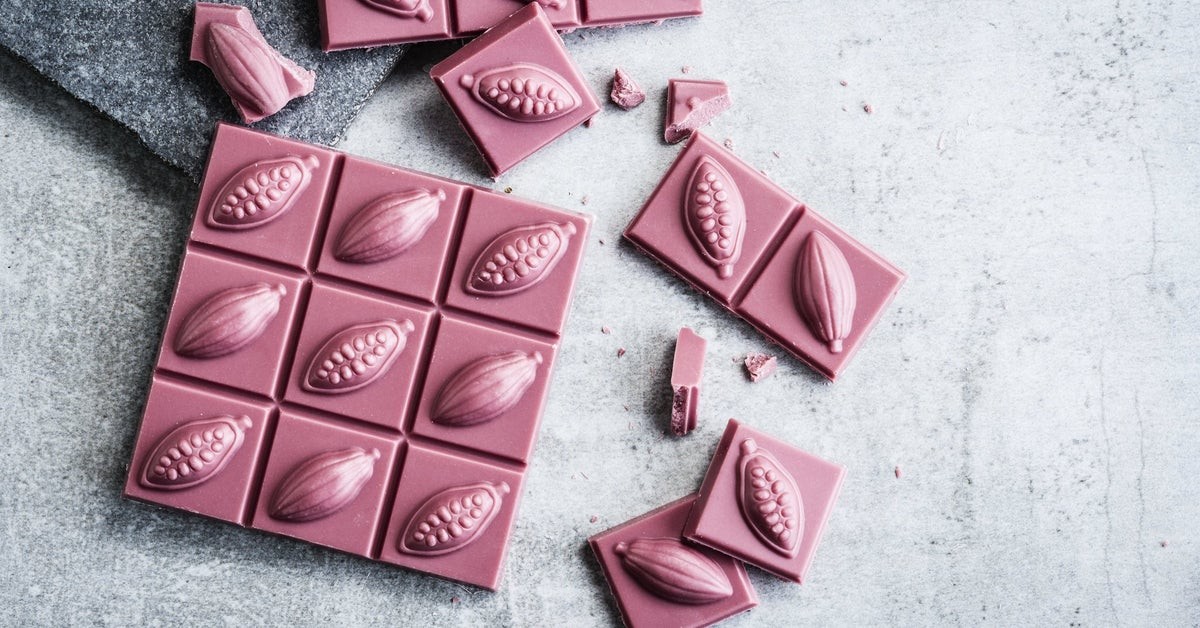
Pink chocolate exists. Not the cheap, candy-colored stuff you dump on cupcakes. Real chocolate. Or so the company behind it says.
I found out about this mystery ingredient through “The Great British Bake Off.” Baking nerds went wild for it. In 2020, Sura Selvarajah made ruby-swirled brownies. Marc Elliott baked ginger Florentines with it. Before that, Priya O’Shea used it for biscuit bars.
It looks pretty. That millennial pink hue is impossible to ignore. But taste? That was the real question. I dug into it. Talked to the makers. Talked to people who know cocoa better than I do.
Here is the breakdown.
It is a monopoly product
First thing you need to know: “Ruby” is a brand.
It belongs to Barry Callebaut. That giant Swiss manufacturer of industrial chocolate. Megan Giller, a chocolate writer who knows her stuff, called it out. “It is a proprietary product.” No one else can make “ruby chocolate.”
Callebaut introduced it in Shanghai in September 2012. Wait. No. September 2017.
They called it the fourth type of chocolate. White came 80 years prior. Before that. Dark and milk. This was supposed to be the big new thing. After over ten years of secret research, they said they created a “tango of berry fruitiness.”
Since 2018, it has been everywhere. KitKats have it. Starbucks drinks have it. Magnum bars do too. But you can’t just buy the beans.
You cannot walk into a store and buy “ruby cocoa.” Not possible. It comes from Callebaut only. Already mixed. With sugar. Milk. Other stuff. It is an ingredient you have to order. Not a crop you grow.
How do they make it pink
Here is the wild part. Callebaut claims they do not dye it.
No food coloring. No artificial pink goo. They say the color is natural. Comes from the beans themselves.
Smit, VP of global marketing at Callebaut, says it comes from the “ruby RB1” bean. A special selection.
“We unlock the flavor and pink color tone,” he told me.
Well. Actually, he told HuffPost.
But here is the nuance. Giller notes that the beans are blends. Sourced from Brazil. The Ivory Coast. Ecuador. But the pinkness? That is not inherent in a wild pink cacao plant. It is in the process.
Dimitri Fayard, a chef for Callebaut’s Chicago academy, explains that it is about selection. They look inside the shell. They find precursors. Then they process them in a very specific way.
He hints at the secret sauce. A method that preserves sour flavors. Using the pod’s flesh as a sweetener. Nothing goes to waste.
But there is suspicion. A lot of it.
Some experts point to a 2008 patent. It suggests the use of unfermented beans treated with citric acid. That would explain the fruitiness. And maybe the color.
Ingredients on commercial ruby chocolate bars usually list: Sugar, milk solids, citric acid, soy lecthsin, vanilla. And cocoa butter.
The acid adds that berry tang.
What does it taste like
Close your eyes.
Imagine white chocolate. Very creamy. Sweet. Now add raspberries. Fresh ones. Not the jarred kind that tastes like sugar water. Real raspberry zest. With a slight sour kick.
That is it.
Giller compared it to white chocolate with fruit. Fayard calls it “intense fruitiness” with fresh sour notes. It does not taste like dark chocolate. No bitterness. It sits right between white and milk.
In terms of composition, it is heavy on cocoa solids. 47.3%. Most white chocolate has way less. Around 20-40%. Milk chocolate varies. But ruby sits in a weird middle ground.
If you are baking, treat it like white chocolate.
Norma Salazar from the Institute of Culinary says you temper it the same way. Melt to 115 F. Cool to 85. Rewarm to 88. It snaps nicely. Shines up well. Holds its shape for decorations.
So culinarily. It works. It is versatile. But legally. It is messy.
The FDA has standards. Dark must have this much cocoa butter. Milk needs this much milk solid. White has strict rules about milk fat.
Ruby? As of September 2023, it is not “chocolate.”
Technically.
Giller points out the FDA only granted a temporary permit. It is waiting for a decision. Whether it fits the legal definition or not. Until then, it lives in a gray zone.
The controversy runs deep
Why is everyone annoyed?
Because experts do not buy the marketing pitch.
Angus Kennedy. A major figure in craft chocolate. He hates the idea that it is a new “type.”
“Chocolate producers in Peru have been making pink chocolate for years,” he said.
He calls it a marketing gimmick. To him. It is just white chocolate with raspberries and a bit of chocolate. Swallowed in one bite. “That’s ruby chocolate. It is quite easy.”
The taste comparison is damning. It implies the product adds nothing new. Just flavors mixed in.
And Callebaut? They do not have the cleanest history.
A 2016 report by Mighty Earth accused them of buying illegal cocoa linked to deforestation. Rainforests cut down. For their beans.
In 2023. A class-action lawsuit named them again. Alongside Nestle. Mars. Cargill. Hershey. Former child laborers sued them. Alleging they profited from forced labor in Africa.
So when Barry Callebaut launches a shiny pink product claiming it is the future of chocolate… some people look at the money. And the ethics.
They wonder if this is innovation.
Or just another way to sell us processed sugar wrapped in PR.
The color is lovely. I will give it that. It looks like a sunset trapped in a block.
But the taste?
Is it a revelation?
Or just a pink tint on the status quo?