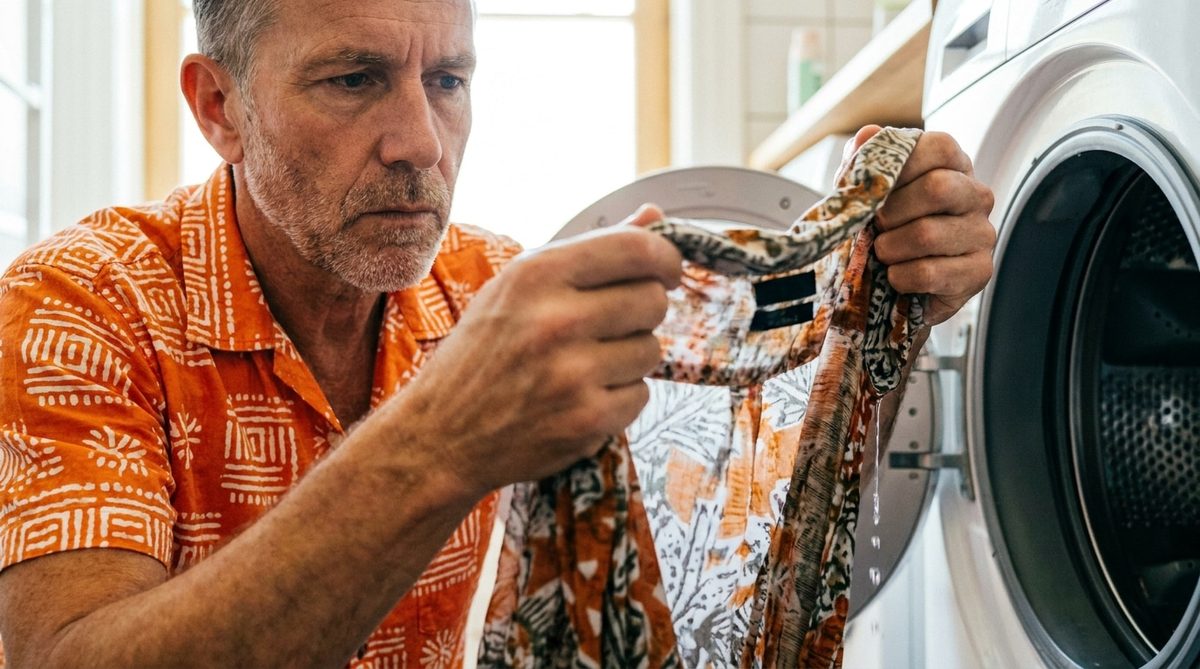
You put the laundry in. You use expensive detergent that smells like a luxury spa. You wait. You open the door.
And boom.
The scent hits you. It’s not clean. It’s humid. It’s out of date. It’s the smell of a closet that hasn’t seen the air in weeks. Why does this happen? Why do your clothes smell worse than when you put them in than when you put them on?
It’s not just about your clothes. It’s not just soap. It’s a combination of hidden residues, machine neglect, and a chemical misunderstanding of what “clean” actually means.
Here’s what’s really going on with your laundry and how you can fix the problem without buying a fancy new product.
The illusion of purity
A floral scent does not mean hygiene. That’s the first thing you have to accept.
When you wear clothes, sweat and sebum stick to the fibers. These are microscopic. You can’t see them. Synthetic perfumes in detergent don’t remove them from the detergent. They just cover them up.
So your shirt smells like roses in a bottle. But when it hits the skin and gets hot? The natural oils below penetrate. The roses fade. The bad smell is coming back. This is a chemical masking, not a cleaning job.
Fabric softener glue trap
Fabric softener is often part of the problem.
These products cover the fibers with a thin, greasy film. They make clothes feel soft. They also make them waterproof. Dirt, sweat and moisture remain in this layer. You can’t escape.
Your wardrobe is losing its breath. The freshness disappears faster. And the smell lasts longer because it’s sealed.
The hidden mold of your machine
The real culprit is usually the washing machine.
Washing machines create an ideal environment for mold. Dark. Damp. Warm. After spinning, microorganisms grow in the drum. Washing at low temperatures protects the planet, but also helps these microbes survive.
The door rubber seal is a hotspot. There are pools of water. It mixes with lint and dirt. It turns into a gray, foul-smelling sludge. If you don’t clean it regularly, this mud will cover every load. Basically, you are washing your clothes with bacteria.
Why your cleaning product isn’t working
Most cleaning products are designed to remove visible stains. Coffee. Tomato sauce. Dirt.
They are not always effective in neutralizing odor molecules. Chemistry is complicated. It fights the stain but ignores the smell. So the fabric looks clean but still smells.
Then there’s the overdose.
Many people use more detergent to achieve a “better” scent. This backfires. Too much soap creates too much lather. It cannot be completely washed off. The residue remains in the fibers. It feeds bacteria. More bacteria means more smell. It’s a vicious cycle.
Missing Step: Balance the pH
You have to fight acidity and bacteria at their source.
Water with a balanced pH helps eliminate microorganisms. Most current routines skip this step. But it is necessary for true cleanliness.
Soft, purified water allows the cleaner to work better. It penetrates the fibers more easily. You get actual cleanliness. No perfume gimmicks. No chemical residues.
Solution: baking soda
You don’t need a new machine. You don’t need more expensive detergent.
You need baking soda.
It’s cheap. It’s accessible. It is environmentally friendly. It breaks down odors at the molecular level. It is harmless to marine ecosystems when the water drains away. It’s a simple solution to a complex problem.
How to use it:
- Put a tablespoon of baking soda directly on the dirty clothes before closing the door.
- Add detergent as usual.
- Start the cycle.
Baking soda works right from the start. It neutralizes odors. It helps the cleaner do its job.
Long-term benefits
Your clothes feel different. Softer. Lighter. You’re breathing again. They last longer because the fibers are not damaged by trapped dirt or strong chemicals.
The scent remains clean. Not perfumed. Simply clean.
And your machine will thank you. Baking soda gently removes limescale from the interior. It keeps the drum and pipes smooth. It prevents failures. It extends the life of your appliance.
Don’t bury odors under soap. It just makes things worse.
Target the bacteria. Use baking soda. See that your clothes smell like real laundry for the first time in years.
What are you going to do with your first fresh-smelling shirt?