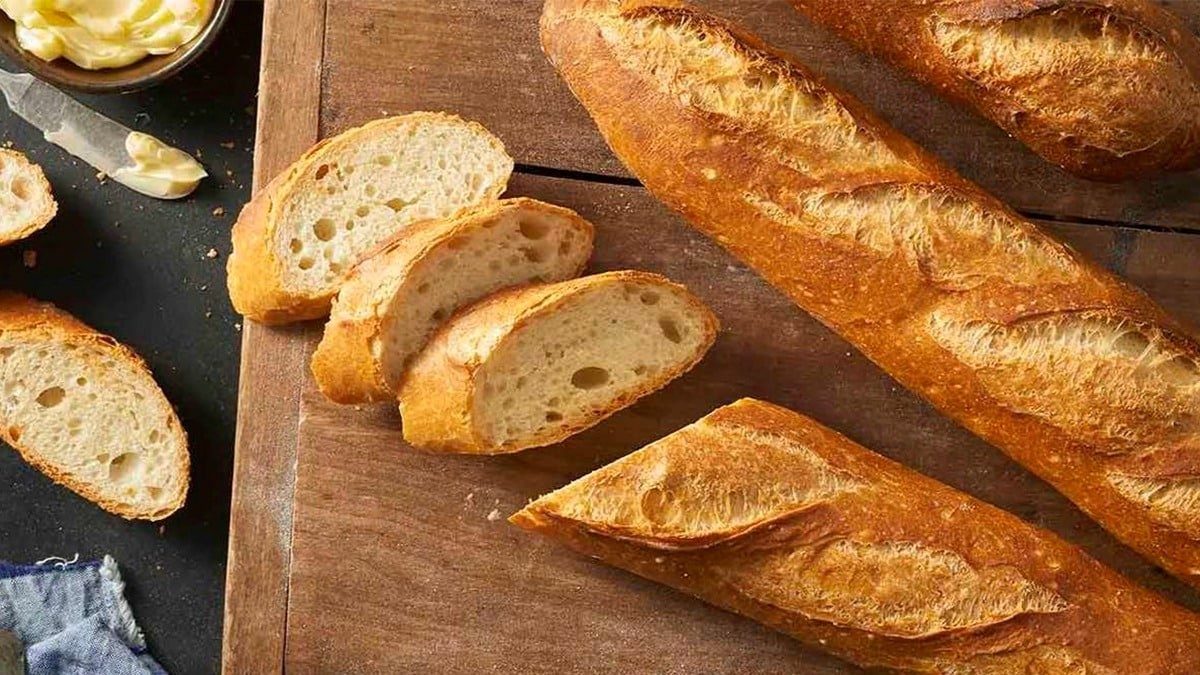
A linen cloth neatly folded on the counter. This is a small act passed on by people who didn’t know the need to wrap bread in plastic. Three days later the bread was still there. The crust is firm. The crumbs are very soft.
The thing that changes everything isn’t an app. This is not a $60 kitchen appliance. This is a vegetable fiber that has been cultivated in France for centuries.
Plastic creates the perfect storm for stale bread. But linen? It acts as a moisture regulator where plastic fails completely. The type of flour you use is more important than you think.
How plastic really affects bread
Wrapping the bread in a plastic bag gets damp. It loses flavor. Mold may also grow. The mechanism is precise. The plastic prevents all evaporation and saturating the crust with water. First, the crust becomes softer. You will notice it the next morning.
Then something deeper starts to happen.
Staling isn’t caused by dehydration. This is due to the crystallization of starch in the soft parts of the dough. This process is called starch retrogradation. Basically, during the baking process, the starch in the flour gels. The particles swell and absorb water, forming a gel and softening the crumb. When the bread has cooled, the process reverses. Aging causes the amylose and amylopectin molecules to recrystallize. This causes a loss of elasticity in the crumb. The bread becomes harder to the touch.
Even worse is the moisture inside the plastic. Retrogradation requires water to move the starch molecules. Plastic bags create ideal conditions for the bread to harden quickly. Some of the moisture is trapped in the crust, causing it to soften and lose its crispness. At the same time, the crumb becomes dull, loses its elasticity and crumbles easily. result? The baguette is soft on the outside and firm on the inside. The taste was gone the next day.
There is another detail that most people overlook. As the temperature drops, the aging rate of starch accelerates. It is a common reaction to put the bread in the fridge to keep it “fresh”. However, it actually speeds up the curing process. Temperatures between 0 and 4 °C accelerate the hardening of the starch and make the bread rubbery. The refrigerator is probably the worst place to store bread.
Linen as a moisture regulator
Fibers play an important role in moisture regulation. Absorbs excess moisture from the dough and prevents the dough from sticking. At the same time, it forms a protective barrier that slows down the evaporation of moisture from the crumbs. The bread breathes just enough. This is a balance that cannot be achieved structurally with plastic.
Natural fiber fabrics are porous, allowing excess moisture to escape, moisture that would otherwise make the crust soft. However, it is dense enough to slow down general evaporation and prevent the crumb from drying out. Linen is particularly suitable for this. A natural material with an excellent balance of coverage and breathability. It’s no coincidence that bakeries recommend using linen cloth to store bread. It is also recommended by the famous Maison Poilane.
The bakery itself also uses a lot of linen. You can see the linen cloth with which the baguette is shaped. Bannetons are often lined with linen. Bakeries are not waiting for the “zero waste” trend to return. Used to shape the dough before baking. In ancient times, people stored bread by wrapping it in linen. This custom has only recently been broken. Its origin goes back to the popularity of food-grade plastics in the 1970s and 1980s. Not to any scientific consensus against it.
Shelf life varies widely. Baguettes left in the air become inedible within 24 hours. A loaf in a plastic bag gets soggy in half a day. The linen method keeps large rustic or rye breads fresh for 3-5 days. The baguettes stay good for about 48 hours.
Your choice of bread is very important
Containers are important. But the content is also important. Sourdough bread stays fresh for more than a week without becoming stale or moldy. Many yeast-raised breads become inedible after a day. The reason is biochemical. The microorganisms in the sourdough absorb water, which making it less available for retrogradation. This phenomenon is also strongly limited by the acid residues produced by sourdough cultivation.
Flour also has its own role. White bread does not keep as long as half or whole wheat bread. Using less processed flour can extend the shelf life of the bread. The classic baguette made with T55 flour and industrial yeast bakes well and is golden brown in the display case, but it has accumulated all kinds of flaws. Commercial baguettes are often made from doughs that are insufficiently cooked with a high moisture content. This explains why it hardens so quickly.
The shape of the bread is also important. The rounder and larger the bread, the softer the crumb remains. Sourdough bread wrapped in linen and placed on the counter protected from the sun is a match made in heaven. if the crust starts to dry out slightly, reheat the bread to redistribute the moisture and starch inside. It brings back a sense of freshness.
Why does bread go stale (and how to prevent it)
This is not nostalgia for the good old days. It’s about waste.
More than 60% of French people admit to throwing away bread every year. 41% of people throw away more than half of their baguettes every month. Why? 68% said it would be dry. Stale. Unpleasant.
Bread is currently the most wasted food. It ties with fruits and beats vegetables.
Throwing away bread costs much more than the trash. One baguette corresponds to 150 liters of water. Mainly wheat farming. The main culprit isn’t malice. This is ignorance. People don’t know how to keep bread fresh longer.
The change to linen bread bags changes the math.
This is not a romantic throwback to a simpler time. This is a sensible choice. Probably the most cost effective. Flax is harvested from local fibers. More than 70% of the world’s linen is produced in France. This crop does not require irrigation. Minimal inputs. Zero waste by design.
Linen bags can be used for several years. Plastic bags last for several hours.
The goal is simple. Prevents dryness before it starts. Keep the crust. Save water. Use what you have.
The difference is the material. literally.