A receding hairline brings with it a special sense of shame. For decades, horseshoe-shaped hair surrounding a bald patch has been a common symbol of the least attractive aspect of aging. This is right next to the spare tire on the “uncool signs of getting older” list.
Celebrities try to flip the script. Bruce Willis. michael jordan. Patrick Stewart. They made thinning hair look rugged. Maybe it’s sexy. But for the 40 million American men and women who experience hair loss, sexiness isn’t the goal. It’s survival.
We spend over a billion dollars a year to stop it. We buy grafts. lotion. Toupees. The sprayed fiber looks convincing until the rain. But will it succeed? Before you can find the answer, you need to understand your enemy.
The Science of Shedding
There are about 100,000 hair follicles under the scalp. They are not static. They are busy. Each follicle goes through a cycle consisting of three different phases:
- Anagen: The growth phase. This is hard work.
- Catagen: The transition. a short time in between.
- Telogen: The resting and falling-out phase.
Hair grows about half an inch per month. The growth period is 2-6 years. Then it drops out.
If you find strands in the shower drain, don’t panic. You haven’t lost your mind. You are not going bald today. It is normal for 50-100 hairs to fall out a day. It is part of the telogen cycle. Your body gets rid of the old and makes room for the new.
Baldness occurs when this equation breaks down. This happens when more hair is lost than regrows. This happens when the new hair is thinner than the old hair. This happens when strands come off in clumps.
The Hormone Connection
The most important factor in this breakdown is testosterone.
When testosterone is converted to dihydrotestosterone (DHT), the situation is dire for the follicles. DHT attacks the hair follicle. Production will be slow. Weak and thin hair is born. In the end, production was completely stopped. The follicle dies.
Women are not immune. There is also testosterone. But we have estrogen. Estrogen acts as a buffer. It weakens the effects of testosterone. This protection lasts through menopause.
When estrogen levels drop during menopause, the buffer disappears. The testosterone runs unchecked. During this period, many women face the problem of hair loss. The same mechanisms that rob men of their crowning glory will eventually show up in women, but only later.

We tend to think that thinning hair is just a cosmetic problem. it is not. This is a medical signal. While male pattern baldness gets a lot of attention in the media, women face unique challenges when it comes to hair loss. The mental strain can be severe. You may feel like you are losing a part of your identity. This is normal. But before you panic, it helps to know what’s really going on under your scalp.
Female hair loss pattern
First, let’s talk about female pattern baldness. It’s not just “male balding” in a woman’s body. About a third of women experience menopause, but some start earlier. What is the essential difference? The hairline usually does not change. You don’t wake up with a widow’s peak.
In contrast, the thinning is diffuse. It’s all over. The part in your hair widens. It becomes more visible on the scalp, especially on the top of the head. Some dermatologists call this a “Christmas tree” pattern because the thinning radiates from the area outward.
Why is this happening? Genetics and hormones are often involved. Like men, women also have androgens. Over time, these male hormones cause hair follicles to shrink. The result? Shorter growth cycles. Hair falls out faster than it grows back.
It’s emotionally devastating. Society teaches women that their value is tied to their appearance. When it changes, it’s painful. But it is treatable. Early intervention is key.
When Hair Falls Out in Circles: Alopecia Areata
This is different. Alopecia areata is an autoimmune disease. About 1.7% of the population is affected. It can hit anyone. young. old. man. woman.
What happens is that your white blood cells get confused. They attack the hair follicles. The result? Sudden, circular patches of hair loss. One day you’re fine. Then you will see a smooth bald area.
Sometimes it stops. The hair will grow back in a few months. Sometimes it isn’t. If it spreads, it can cause alopecia totalis (loss of all scalp hair) or alopecia universalis (loss of all body hair).
Researchers believe genetics load the gun. A virus or stress event pulls the trigger. It’s not your fault. It’s not because you didn’t eat enough iron. This is a malfunction of the immune system.
Scars and physical damage
Not all hair loss is hormonal or autoimmune. Sometimes it’s physical. Burns. Cuts. Radiation therapy. Severe fungal infections can also leave scars on the scalp.
Scarring alopecia destroys hair follicles. Hair doesn’t just fall out. The structures that supported it have disappeared. New hair does not grow from the scar. That’s why early diagnosis is important. If you notice redness, scaling or pain, seek medical attention. Permanent loss is a real risk.
Telogen Effluvium: The Resting Phase Gone Wrong
Hair grows at regular intervals. Anagen (growth). Catagen (transition phase). Telogen (rest).
At the end of the telogen phase, hair falls out. You may lose 50-100 hairs every day. This is normal. You probably don’t even notice it.
However, in telogen effluvium, too many hairs enter the resting phase at the same time. Maybe you had a baby. Maybe you had surgery. Maybe you lost your job. Maybe you crashed a diet. Upsetting the system can cause the hair to go into shedding mode.
Acute telogen effluvium lasts about 6 months. It usually resolves itself. Chronic cases can last for years. Some people use minoxidil to relieve symptoms. Others just wait. Hair grows back. It just takes time. Patience is not a virtue here. This is a requirement.
Rare genetic defects
Hair loss rarely starts at birth. Conditions like monilethrix, pili torti, and trichothiodystrophy can damage the hair shaft itself. Hair is very fragile. It breaks off. It looks sparse.
These are all genetic. They are rare. But they do exist. If your hair is always brittle, it’s not your shampoo. It’s your DNA.
Trichotillomania: the need to pull
Trichotillomania is a mental disorder. This is not vanity. This is not a bad habit. It’s a compulsion.
1-3% of people suffer from it. I feel the need to pull. From the scalp. Eyelashes. eyebrow. beard.
Some people do this to relieve tension. Some do it on autopilot. They don’t even realize they’re pulling. It is related to an imbalance of serotonin and dopamine. Brain chemicals.
It may be dangerous. When the hair is swallowed, a ball forms in the stomach. This is trichophagia. It can be life-threatening. If this sounds like you, get help. The treatment is effective. Medicines can help. you are not broken
When to see a doctor
Don’t guess. Don’t buy random supplements. If you see any of these signs, make an appointment.
- Hair falling out in clumps
- Sudden severe hair loss
- Scalp redness, itching and burning
- Hair loss after starting a new medication
Hair is a mirror. It reflects your state of health. Look closely. Act early.

It’s not just your mother’s family. Or your father. Of course, genetics also plays a role. Hormones do too. But if you notice a receding hairline or notice a clumps in the drain, the reason could be completely mundane.
Disease is a common cause. Diabetes, lupus, and thyroid problems can all trigger hair loss. Even severe scalp infections can leave scars on hair follicles and prevent these areas from regrowing. High fever? It can put hair growth on pause.
Cancer treatments are another big one. The good news is that hair usually grows back after treatment.
Then there are the pills you take every day. Hair loss can be a side effect of medications used to treat arthritis, depression, heart disease, high blood pressure, and gout. Oral contraceptives can also do this.
If you are a woman who has recently given birth, don’t panic. Pregnancy hormones can change the hair cycle and cause hair to stay in the growth phase longer than normal. After giving birth, hormones return to baseline. Suddenly, all the hair I had to grow out of during those nine months disappeared at once. This is dramatic. It’s terrible. However, this is temporary.
The effect of daily habits
You might be causing the damage yourself.
Harsh chemical treatments such as bleaching, dyeing, straightening and perming can weaken the hair shaft. Improper use or too frequent use can cause hair breakage. Tight hairstyles like cornrows or tight rollers can pull the hair from the roots. Over time, this pull can damage hair follicles and cause permanent loss.
Smoking is worse than you think. It’s not good for your heart. This is not good for your lungs. Now, it’s bad for your head. A study from the Archives of Dermatology found that Asian men who smoke 20 or more cigarettes a day are more likely to go bald than non-smokers. The theory? Smoking directly damages hair follicles.
Debunking the bald myth
The internet is full of horror stories and false treatments for hair loss. Let’s make something clear.
Myth: If your maternal grandfather went bald, you will too.
FACT: You inherit genes from both sides. Look at your mother’s father and your father’s father. This is your real genetic map.Myth: Massaging the scalp stimulates growth by boosting blood flow.
FACT: Studies show that there is no connection between blood circulation and hair loss. Vigorous massage may cause the remaining hair to fall out.Myth: Cutting or shaving hair makes it grow back fuller.
Fact: This is an optical illusion. Hair is thicker at the base than at the ends. Shaving doesn’t change thickness. Only the blunt ends remain.
FDA approved treatments that really work
There is no cure. But there are ways to slow it down. Two major drugs have been approved by the FDA. Both need continuous use. When you stop using it, the hair loss returns.
Minoxidil (Rogaine) is available without a prescription. It comes as a liquid and is used twice a day. Stimulates hair follicle growth factors, thickens the hair shaft and prolongs the growth phase. For men, use a 5% concentration. Women are advised to stick to 2%. Why? For women, high doses may cause facial hair growth.
Finasteride (Propecia) is a prescription drug. It blocks dihydrotestosterone (DHT), the hormone that causes male pattern baldness. Only suitable for men. It is not effective in women and may cause birth defects. Is it effective? Studies have shown that hair loss stops in 90% of men and hair grows back in 65% of men. The trade-off? Decreased sexual desire.
In Alopecia Areata (patchy hair loss), corticosteroid injections are the gold standard. Hair usually starts growing within a month. There are also topical creams, but they are not very effective.
Anthralin (Drithocreme) is a cream that treats hair loss. You apply it and wash it off daily. About 25% of users see new growth within 6 months.
Surgical options
If medical treatment fails, surgery is the most permanent solution.
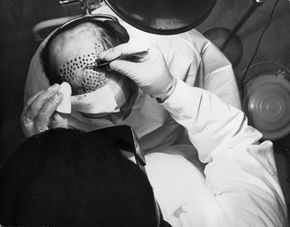
Medicines can temporarily reduce hair loss. If you stop using it, the progression may stop or reverse. Surgical procedures, such as hair transplants, promise permanence, but carry risks associated with invasive procedures, such as bleeding and the possibility of infection. This is a trade-off between maintenance and operations.
Development of hair transplantation
Hair transplant technology has developed significantly since the middle of the 20th century. Dermatologist Norman Orentreich performed the first known operation in New York in the early 1950s. L. Lee Bosley later became a prominent figure in the industry, performing his first transplant in 1963 and starting his own company in the 1970s.
Back then, the results were rarely subtle. The surgeon removes a section of hair from the back of the head and places it in a hole of the same size in the bald spot. The result is often similar to filling in the grass on a golf course. The hair appeared clumpy and grew at awkward angles.
Today’s implants are more sophisticated. The procedure is precise and labor-intensive. The doctor injects anesthesia to numb the scalp. A small piece of scalp containing nerves, blood vessels and muscles is removed. The strips are then transferred to the hairless area. The wounds are stitched up. Since each graft contains only a few hairs, the procedure can take several hours. Patients may need hundreds of grafts to achieve significant results. Side effects such as infection and scarring remain a concern.
Scalp reduction/enlargement technique
There are other surgical options for people with extensive hair loss. Scalp reduction works by reducing the size of the bald area. Although the skin appears to be firmly attached to the skull, doctors can stretch it. Remove the bald areas of the scalp and pull the areas covered by hair over the gaps to cover them.
A variation called a “flap” can treat larger baldness. This procedure involves harvesting skin and hair from the back of the head or other inconspicuous areas to hide the defect.
If you don’t have enough excess skin to reduce, scalp expansion offers another option. Place the tissue expander under the area where there is already hair. As the expander stretches outward, the amount of hair growth tissue increases. The newly expanded skin is then moved along with the hair to the bald spot.
Relationship to Testosterone
The relationship between hormones and hair loss is not new. The Greek physician Hippocrates discovered that castrated men and eunuchs do not go bald. Although he was aware of the effects of testosterone, he did not understand its mechanism.
In the 1940s, Yale University anatomist James B. Hamilton studied this connection using a pair of twins. One brother was bald. The other was castrated in a psychiatric hospital. Hamilton gave the castrated man shots of testosterone. His hair fell out and never grew back. This experiment confirmed that testosterone has a direct effect on hair loss.
Non-surgical treatment for baldness

You don’t need to rely on drugs to restore your hair. There is actually one physical device that has been approved by the FDA. It’s called a laser comb. Men use it by pressing their teeth against the scalp for 10-15 minutes. They do this three times a day.
This device shines a low-intensity laser light on the skin. According to the theory, this light stimulates follicle growth. This is not magic. It’s just very light.
In one study, LaserComb served a large number of users. 93% of men notice an increase in terminal hair. They are thick and noticeable. The type you see in the mirror.
But there’s a problem. price tag. The manufacturer’s price is over $500. Buying a plastic comb costs a lot of money. Some can afford it. Probably not.
So if you don’t spend $0.50 on a light treatment, what are you left with?
Low-tech fixes
You can buy hair. literally. Wigs and hair extensions are always included. These are the oldest tricks in the book. Semi-permanent wigs are also an option.
Then there are shower products. Or powder. These products are popular in TV commercials. They promise instant coverage.
The product itself is made of very fine fibers. You rarely shake them. Adheres firmly to existing hair. Looks like real hair. Keep.
Whether you look genuine or not depends on who sees you. Far away? Maybe it’s close enough. Near? Proper lighting may be necessary. And trust.
Alternative treatments
Some people look at what they have in their pantry. Or a box for refills. These are alternative treatments that are being circulated on baldness forums.
Saw Palmetto is the largest species. Interacts with male hormones. Some people believe it has similar effects to Propecia. Prescription drugs. No prescription is required.
Green tea is also an option. It can affect the hormones that cause hair loss. It also contains licorice extract. Apple cider vinegar. ginger.
One company sells a supplement called Retane. Contains vitamin B5, vitamin E and folic acid. aloe vera. Biotin. Other natural things.
In an unpublished study, the company claimed that 86 percent of patients experienced a reduction in hair loss. There are no side effects.
It’s nice. Until you read the fine print.
“Natural” risks
Let’s talk about natural remedies here. They have not yet been approved by the FDA. It is possible.
That doesn’t mean they are bad. This means that it is not regulated. You never know what’s actually in the bottle.
Some of these treatments can cause side effects. Especially if you are taking other medications. Interactions happen.
Be careful. Just because it’s natural doesn’t mean it’s safe. or valid.
Here’s to the future of baldness research. There’s nothing left to do but wait.

Real hope for hair growth
Most current hair loss treatments are temporary. It can repair sparse areas or slow degeneration, but it doesn’t actually regenerate lost areas. However, things are changing. Science is rapidly advancing towards a future where we may actually be able to grow new hair.
In 1990, Durham University’s Colin Jahoda did something shocking. He had follicle cells removed from his head. He grew them in a laboratory. Then he planted them on his wife’s arm.
Finally the thick black hair has started to grow. It grew on her slim blonde arm. Tests revealed that the hair contained his DNA.
He’s not done yet. Jahoda tried the same approach with mice. In 1992, he created cells from mouse whisker hair follicles. He recreated them in the lab. He planted them in the mouse’s ears. The mouse grew a whisker. From that ear.
Clone a hair follicle
From then on, the goal was simple. Hair follicle cells multiply.
These cells are special. They don’t grow by themselves. They change the surrounding cells. They turn the surrounding tissue into hair. The plan is to clone these cells in the laboratory. They are then implanted into the human scalp. There they become true follicular cells. Sprouting real hair.
Stem cells offer another way. It’s even more flexible. They can change into different types of cells.
Researchers at Rockefeller University have confirmed this. They transplanted the stem cells into genetically engineered hairless mice. The mice grew patches of fur. Scientists are now trying to replicate this success in humans.
Genetic key
Genes are also part of the equation. Researchers at the University of Pennsylvania have discovered a gene called wnt. It produced new hair follicles in the mice.
It is hoped that this gene, or something similar, could be used to grow new follicles in humans. Gene therapy can also block genes that cause hair loss.
It’s not that simple. Hair loss involves a complex combination of genes and hormones. It can take years to truly “heal” from baldness.
More information about baldness, treatments and related topics can be found in the links on the following pages.