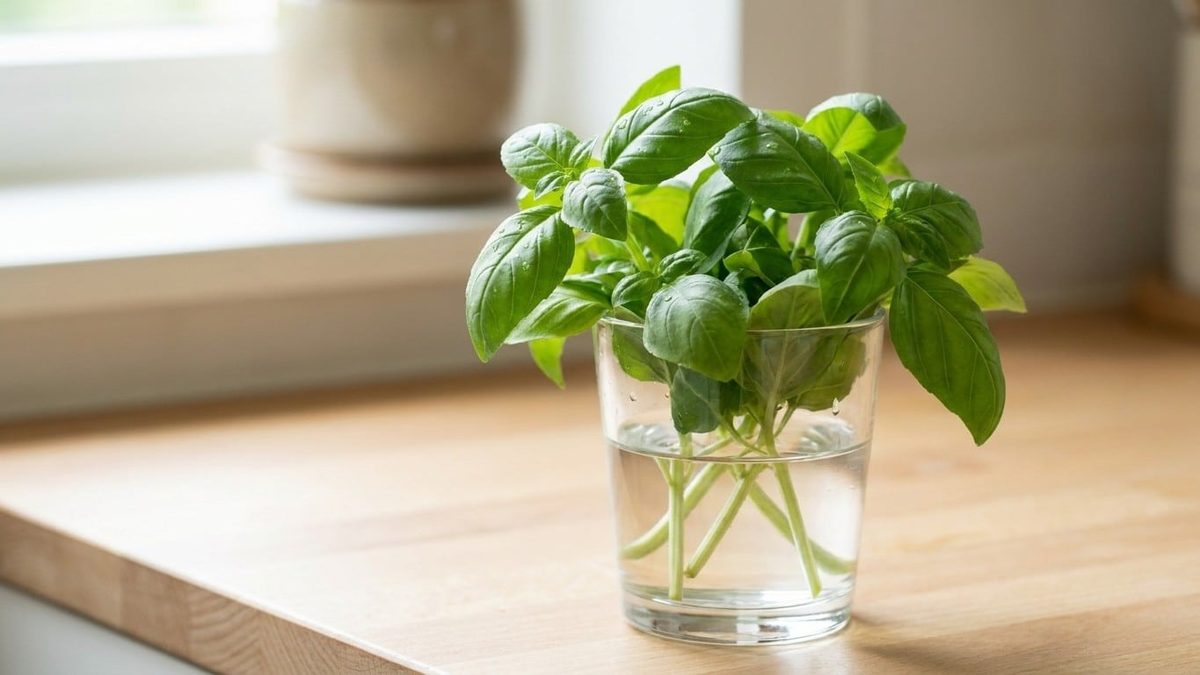
This is the Tuesday morning market. You give the seller a bunch of basil tightly wrapped in plastic. He opened it, put the stems in a glass of water on the counter and immediately ordered the herbs out of the fridge. He said the cold would kill him.
After 2 weeks the basil is still green. It is still flexible. Still smells like the garden.
This is not magic. This is a routine that professional chefs do every day, but most home cooks ignore. We were taught to throw all perishables into the crispier box. However, some plants don’t want to be preserved; they want to live.
The refrigerator is the basil’s worst enemy
Basil (Ocimum basilicum ) did not develop in the cold regions of Europe. It is native to tropical Asia and Africa. Wired to withstand heat and humidity. This means that if you put it in a fridge set to 4°C (39°F), you aren’t just chilling it. You’re shocking it.
Think of it like taking someone used to summer sunshine into a Siberian winter. Their bodies stopped working.
The blackening you see? This is not rotten. This is oxidation caused by enzymes. Cold weather damages plant cells. Once the enzyme is destroyed, it comes into contact with oxygen and reacts with phenolic compounds. This is the same reaction that causes a cut apple to turn brown. A refrigerator speeds up this process.
At temperatures below 12-15°C, the important functions of the basil are inhibited. Growth stops. Cells suffer. Within 48 hours the leaves turn brown, soft and lose their smell.
You bought it for bruschetta or risotto. If you throw it in the trash after a few days, it will be chemically destroyed, although in theory it’s still edible. This is a waste of money and energy.
Glass of water method: simple but fundamental
Treat basil like a cut flower. This is the core strategy.
Place the stems in a cup of room temperature water. Cover loosely with a perforated plastic bag to create a mini greenhouse effect. that’s it. There is no vacuum seal. There is no olive oil bath. Just a glass of water and tap water.
Accuracy is key here.
- Remove lower leaves that would sit in the water.
- Cut the stems at an angle under cold water.
- Put in room temperature water.
Cutting underwater prevents air bubbles from interfering with the stem’s ability to drink water. Diagonal cuts maximize surface area. It mimics plants in the soil.
Place the glass on the counter. Avoid direct sunlight and store in a bright place. Change the water every 2-3 days. Cut the stems again if necessary.
At room temperature (13-20°C), basil retains its essential oil and bright color. This method keeps the herbs fresh for 1-2 weeks. Compare to 2 days in the fridge. You’re multiplying lifespan by five or seven times. The only cost? A glass.
May grow
This is the part that feels incredibly good.
Basil doesn’t just stay fresh in water. It can grow.
New roots usually appear within a few days. A bunch bought for garnish becomes a mini cutting. You can replant those roots in soil. One small purchase can turn into five or six vigorous plants. This is a home garden that starts at the market. The value proposition is almost absurd.
Professional plastic bag techniques
Market suppliers and restaurant industry professionals go one step further.
They place a plastic bag loosely over the glass. The most important thing is to leave the bottom open. This allows air to circulate while trapping humidity around the leaves.
This creates a small microclimate. It can stabilize humidity and protect plants from direct thermal shocks. Limits enzymatic oxidation. This is a small artificial greenhouse.
Don’t seal it tight. Balance required. Protect, not isolate. Water can keep the stems healthy and the bags can protect the leaves.
This helps preserve the flavor. When plants are stressed, the first thing they lose is taste. We value the scent above all else.
Don’t waste the basil
Basil stays fresh for about a week in a jar of water. But what happens if you buy a lot from the market or your garden is completely ruined? It seems pointless to throw it away. This is green gold. What do you do with the surplus?
Freezing is the move. Don’t just throw the leaves in the bag and hope for the best. If you do, it will turn into mush. Use the ice cube trick instead. Roughly chop the leaves. Fill the ice cube trays. Cover everything with olive oil. Freeze thoroughly. Pop the cubes out. Store in a sealed bag. Now you have perfect pre-measured portions for soups, sauces and stews. One cube at a time. No more guessing.
There is also a way to dry it, but let’s be honest. It changes the game. Dried basil loses its bright peppery flavor. The taste has changed. It gets woody. Almost minty. Perfect for a tomato sauce that has been simmered slowly for several hours. Heat brings depth. However, it is not suitable for fresh Caprese salad. Or a delicate heirloom tomato carpaccio. In such cases, there is no substitute for fresh basil. If you want a burst of green brightness, keep it moist. Keep it cold. Keep it fresh.
There is another mistake that people often make. Hacking it too early.
Cutting basil with a knife bruises the leaves. It crushes the cells. This releases the enzymes. These enzymes cause oxidation. The leaves have turned black. The flavor vanishes. Even if you chopped it yesterday and put it in water, chopped basil will betray you. The smell will disappear after a few minutes. It smells flat. It smells like leftovers, not summer.
If you absolutely must cut, Use stainless steel blades. Alternatively, you can tear the leaves by hand. Do this just before serving. Directly into the bowl. Sounds simple. It’s very simple. But this small difference determines whether your food tastes like a warm August evening or dinner from yesterday.
Source: le-caucase.com |gaetanbrillet.fr