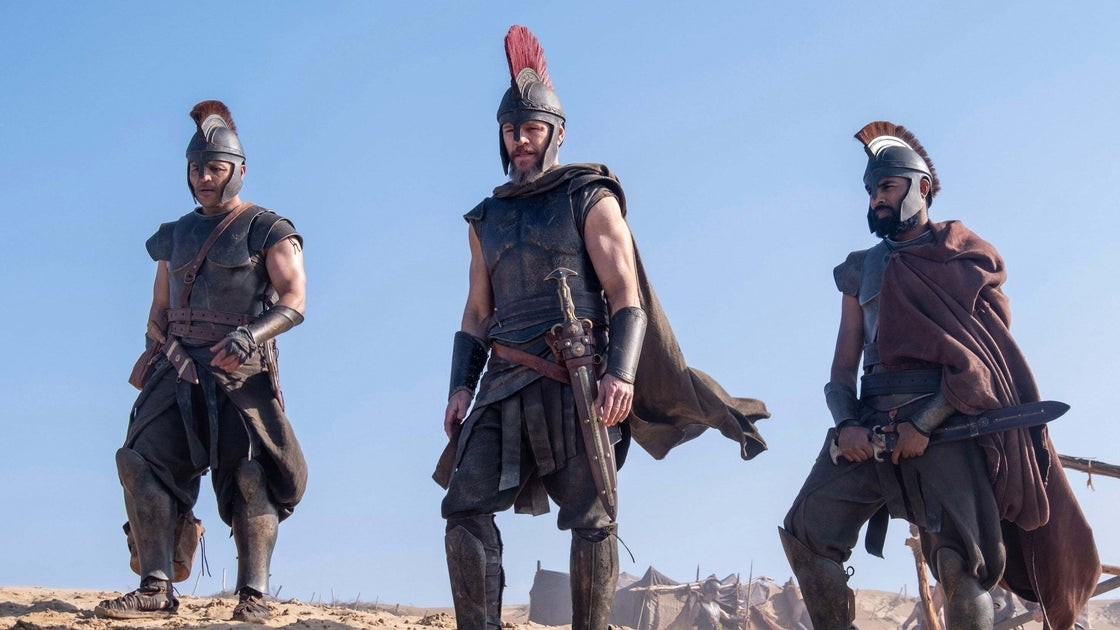
Christopher Nolan’s The Odyssey just hit theaters. It’s a spectacle. Sweeping. Intense. But the real story isn’t just the A+ performances or the visuals. It’s how they pulled it off. The technical ambition is staggering. I dug into the production notes after screening. Here is what actually happened behind the curtain.
How The Odyssey Became the First Entirely IMAX Film
The Odyssey is a milestone. It is the first feature film shot entirely with IMAX cameras. Previous Nolan films used IMAX for specific sequences. This time? From start to finish.
The problem: IMAX cameras are loud. Terribly so. Dialogue recording was nearly impossible with the old rigs. Nolan challenged IMAX engineers to fix it. They built a soundproof housing. The crew nicknamed it “the blimp.” This upgrade, called the Keighley camera system, silenced the noise.
It worked. But it came at a cost.
“The cameras weighed nearly 300 pounds.”
Six crew members carried each rig. They were bulky. So bulky that actors couldn’t see each other during dialogue. The crew built a mirror system to fix eyelines.
The film stock usage was absurd. 2.1 million feet of film. That’s longer than the distance from Toronto to New York.
Building Troy and Reimagining the Trojan Horse
The scale was physical, not just digital. The set for Troy covered 110,000 square Feet. It held over 2,000 extras at once.
There were 60+ structures. Hand-built stone staircases. Working gates. Even 15 full-grown olive trees craned onto the set.
But Nolan changed the legend. The Trojan Horse? He reimagined it. No wheels. It was an offering to Poseidon. Washed ashore. Half-buried in sand. The Trojans had to drag it in themselves. More believable? Yes. More destructive? Also yes.
The props department built multiple 35-foot horses. The one in Morocco took a beating. Dragged across dunes. Falling apart. They called it having “nine lives.” The art department patched it daily.
How the Cast Prepared for The Odyssey’s Brutal Filming Conditions
Matt Damon said every day on The Odyssey would’ve been the hardest on any other movie.
Freezing rain in Iceland. Black sand beaches. Brutal weather. He worked through it all.
The crew hiked for weeks to reach Ithaca. Nolan picked a 15th-century castle on Favignana, Italy. Perched 1,000+ feet up. Italy blocked access roads. So everyone hiked. Every morning. Nolan included.
They eventually built a funicular. Used helicopters for gear. But the trek bonded the team.
Anne Hathaway learned to weave. Authenticity mattered. She trained in Northern California with ancient looms. It “clicked,” she said. But mastering it would take years.
Her costumes reflected Penelope’s decay. Designer Ellen Mirojnick subtly shifted the wardrobe as the years passed in the story. Emotional state mirrored in fabric.
Damon joined before knowing the plot. Nolan asked if he was free. Damon said yes. Asked if he wanted a pitch. Damon said sure. Nolan said two words: “The Odyssey.”
Zendaya thought she was in. Tom Holland told her Nolan wanted to meet. She felt like she “won the lottery.”
Holland had to dial it back, too. He’s athletic. Nolan reminded him Telemachus is a learner. Not a master yet.
Which Practical Effects Defined The Odyssey’s Visuals
Nolan hates wigs. Hair designer Jaime Leigh McIntosh got one directive: “No wigs.” Actors grew hair and beards for months. Real texture for IMAX resolution.
The costume team made 5,300 costumes. 500+ people worked across countries. Bronze Age research. Hand-aged armor. Every thread visible in the IMAX lens.
The Laestrygonians? No CGI.
Man-eating giants. Created via wirework, forced perspective, and massive sets. Done in-camera. Old school.
The Cyclops cave? Not a set. Nestor’s Cave in Greece. Prehistoric. Linked to Hermes myths. Real limestone walls.
Hades? Iceland.
Shot during the “midnight sun” in June. Daylight didn’t end. The light was eerie. The landscape desolate. Cold. Perfect for the land of the dead.
Argus, the dog? A Portuguese Podengo. Ancient breed. Fitting for a story thousands of years old.
Who Is The Odyssey Dedicated To?
The credits dedicate the film to David Keighley.
Who is he? IMAX’s late Chief Quality Officer. He spent decades advancing their tech. He helped oversee the quieter camera system used here.
He died in August 2025, just three weeks after finishing his work.
The tech exists because of him. The silence in the blimp housing was his legacy.
Nolan didn’t just adapt Homer. He rebuilt the tools to do it. The film is loud. The process was quieter than expected.